It might be over 2000 years since the Romans invaded Britain, but you can still see the impact they had across the country. And that includes in the Cotswolds, with its Roman roads, villas, bathhouses and amphitheatres. The area’s first-ever Roman Festival was even held at Birdlip this summer. So if you want to go back in time to see what the Romans did for us – and the Cotswolds – here are the Roman sites in the Cotswolds you can visit, as well as a few which are still hidden away.
The Romans in the Cotswolds
Roman Britain lasted for around 370 years, starting in 43 AD when Emperor Claudius led an invasion of the country. But Rome was already influencing life in Britain before then.
Previously, Britain was ruled by several tribes, including the Dobunni whose territory covered what’s now the Cotswolds. But following military campaigns by Julius Caesar in 54 and 55 BCE, trade links were established between the Romans and British tribes, who shared goods and knowledge.
After the invasion in 43 AD, the Romans took control of southeast England. The Dobunni were a peaceful farming tribe and quickly submitted. Their territory became part of the Roman Empire, and forts and settlements were established to help make sure it could be defended.
One of them was at Corinium Dobunnorum (now Cirencester). Its strategic position where three Roman roads – the Fosse Way, Ermin Way and Akeman Street – met meant it grew to be an important trading centre. By the second century it was the second-largest Roman town in Britain after London, with a population of 15,000 and an amphitheatre, basilica and forum.
A Roman settlement also grew up around the thermal springs at Aquae Sulis (now Bath). A public bathing complex was built alongside a temple dedicated to the goddess Sulis Minerva – a hybrid of the Celtic goddess Sulis and the Roman goddess of wisdom Minerva.


The Cotswold countryside was a popular place to live for rich Romans too. Over 50 villa rustica (countryside villas) have been found in the area, one of the highest concentrations in the country. These grand residences came with underfloor heating, bathhouses and mosaics.
But Roman Britain began to decline in the fourth century, with attacks by the Saxons, Picts and Irish, and money and troops being diverted abroad to defend the Empire. By 410 AD the last Roman troops were sent home. Britain was left to fend for itself, and the Roman era was over.


Roman sites in the Cotswolds you can visit
The Roman Baths, Bath
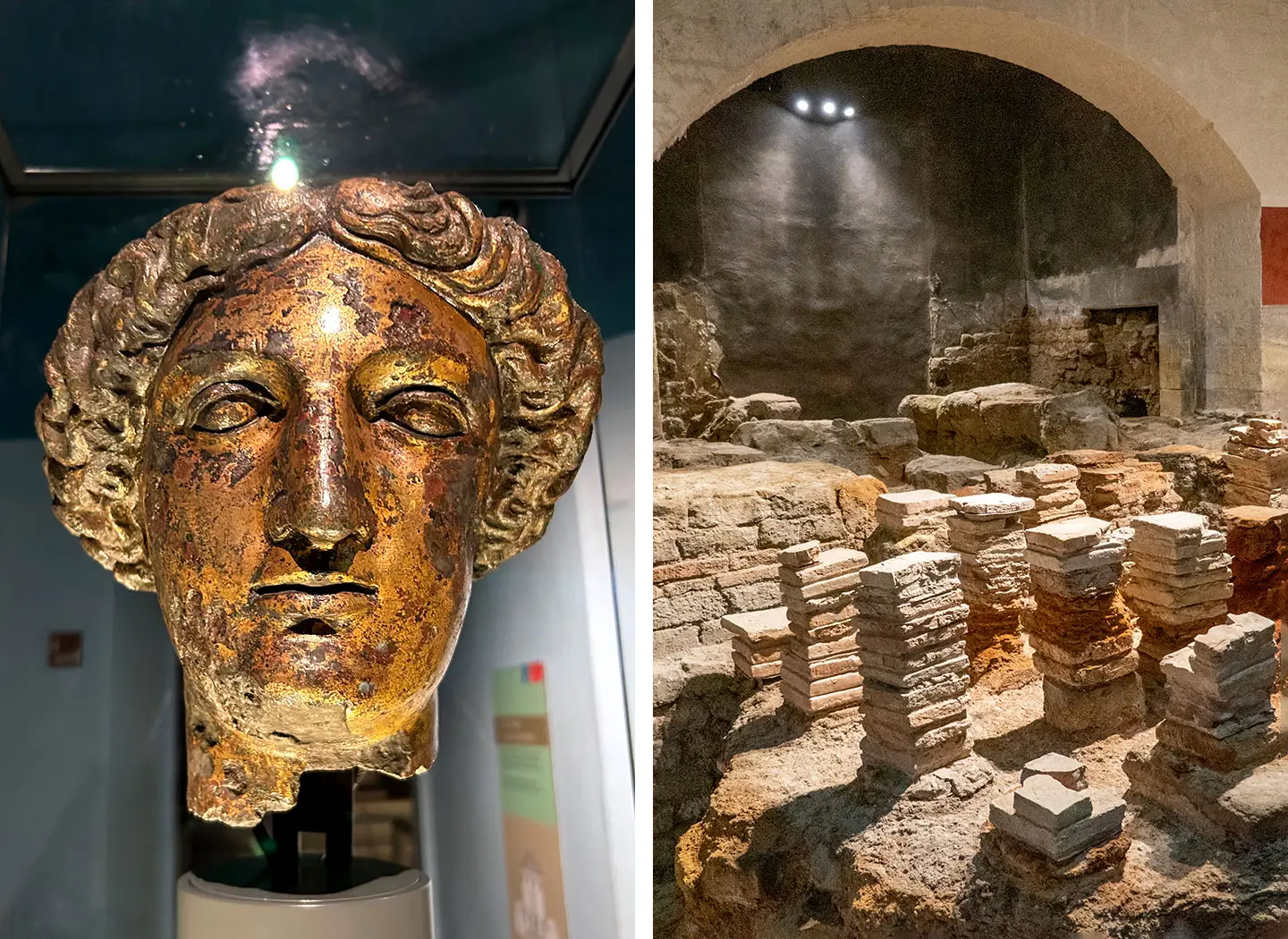
Unlike many Roman settlements, Aquae Sulis was a place for relaxation and enjoyment, rather than being built for defence. At the heart of it was the Roman Baths, where Romans from all walks of life gathered to socialise and soak in the healing waters of Britain’s only naturally hot springs.
The Romans believed the spring was sacred and built the Temple of Sulis Minerva next to it. Over the years the site grew into a spa complex, using the latest in Roman engineering to create the Great Bath, frigidarium (cold pool), tepidarium (warm room) and caldarium (hot pool).


The baths were used right up until the Romans left Britain. The original sections are below ground level, with the ornate building you can see above added in the 18th century. You can explore the Great Bath with its bright green hot pools, Sacred Spring, temple remains and bathhouse.
There are also some fascinating finds at the museum including coins and curse tablets, which were lead tablets thrown into the water to ask the goddess to punish your enemies. There’s a self-guided audio tour to explain what you’re seeing, and special events like torchlight evenings.
Entry £22.50–£32 adults/£15.50–£25 children aged 6–18 (depending on the season and day of the week). Address: Abbey Churchyard, Bath BA1 1LZ

Chedworth Roman Villa
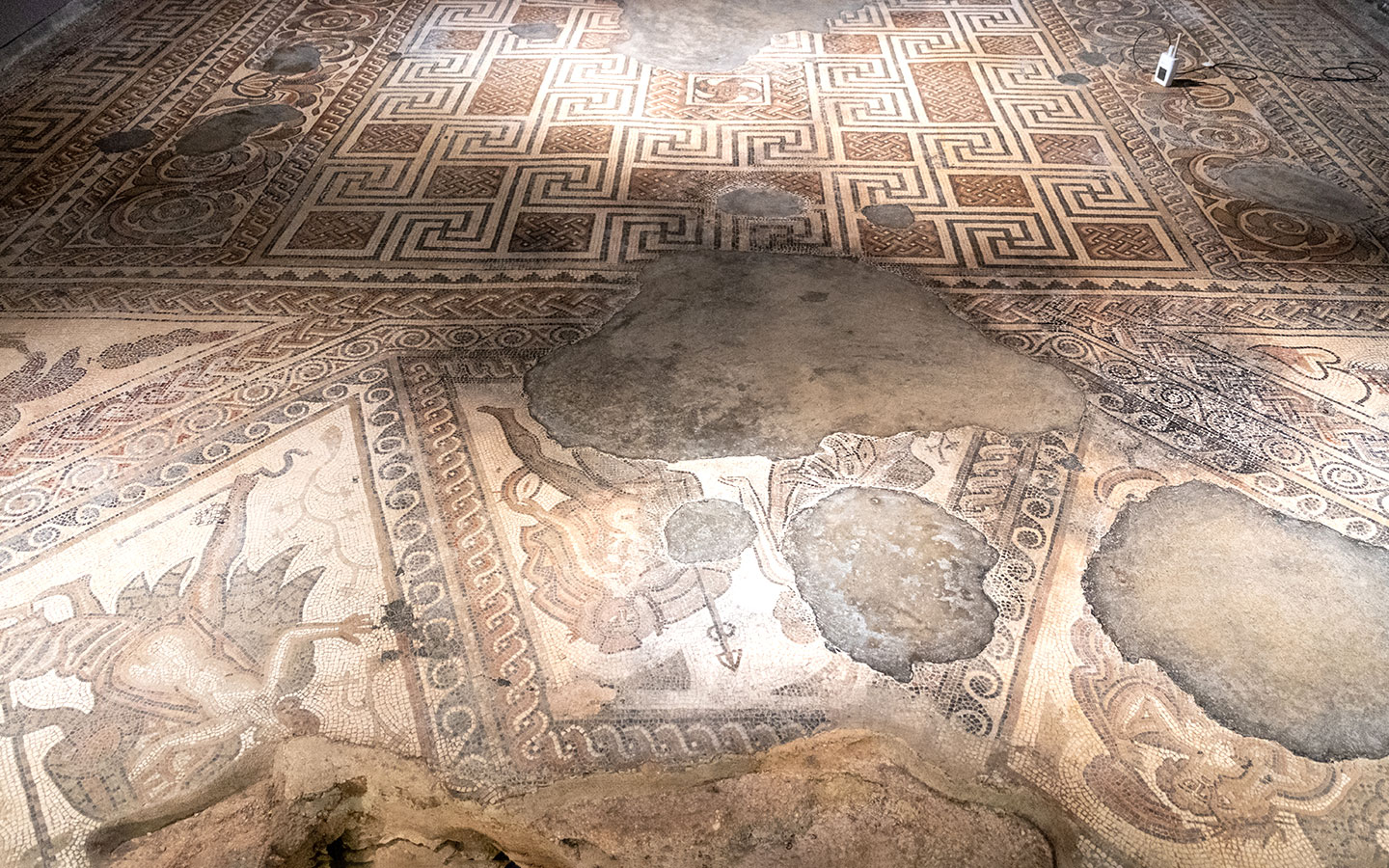
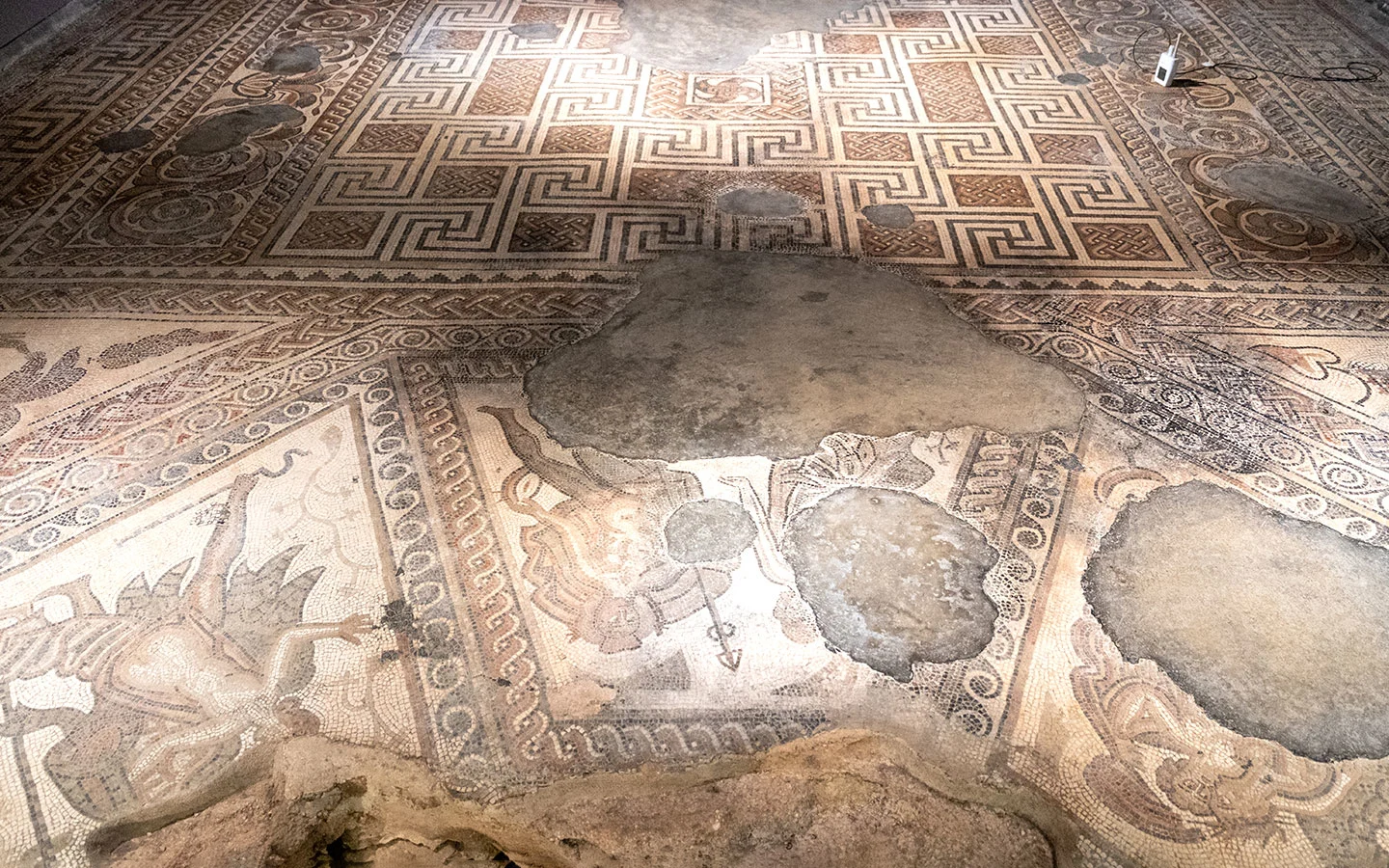
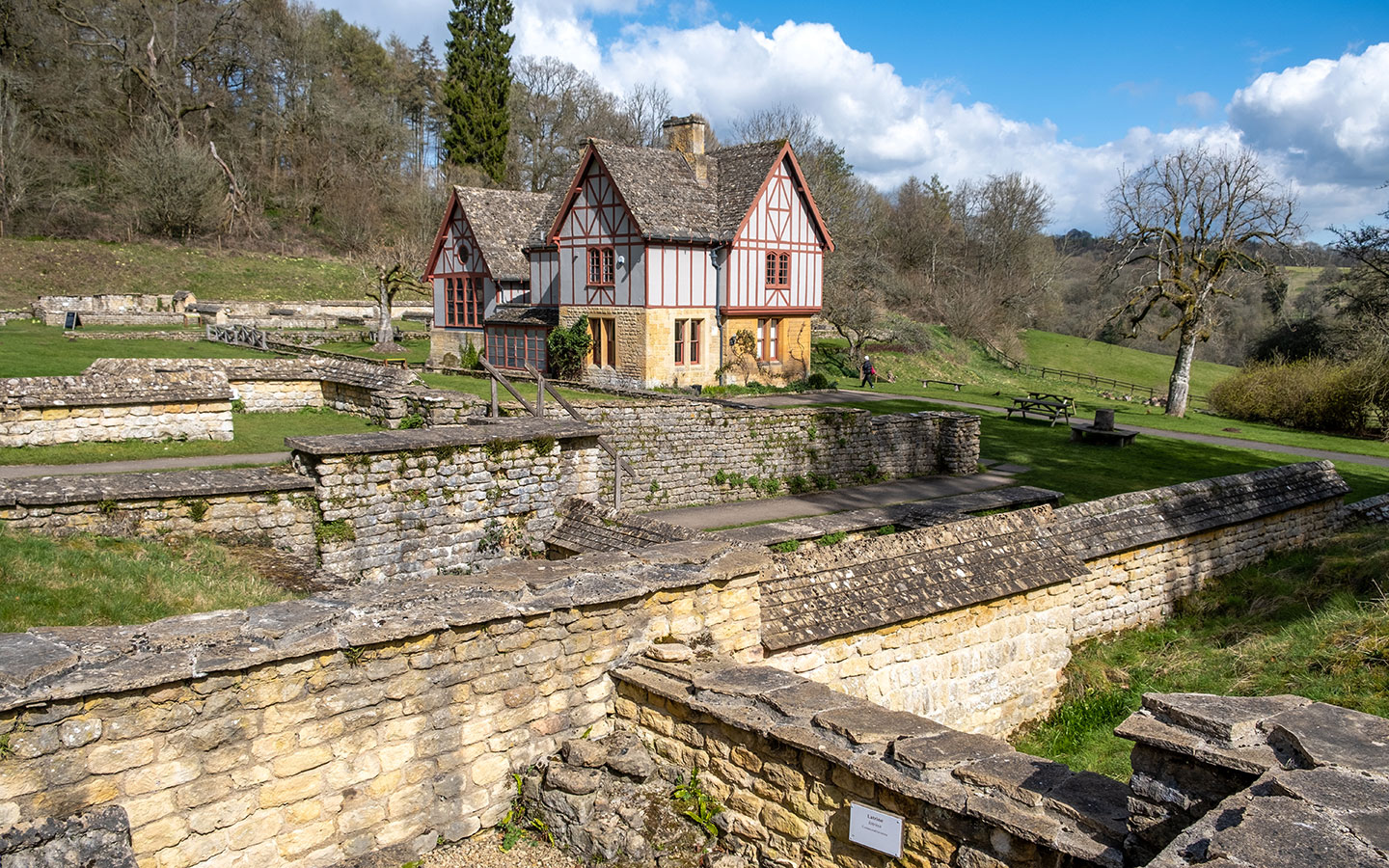
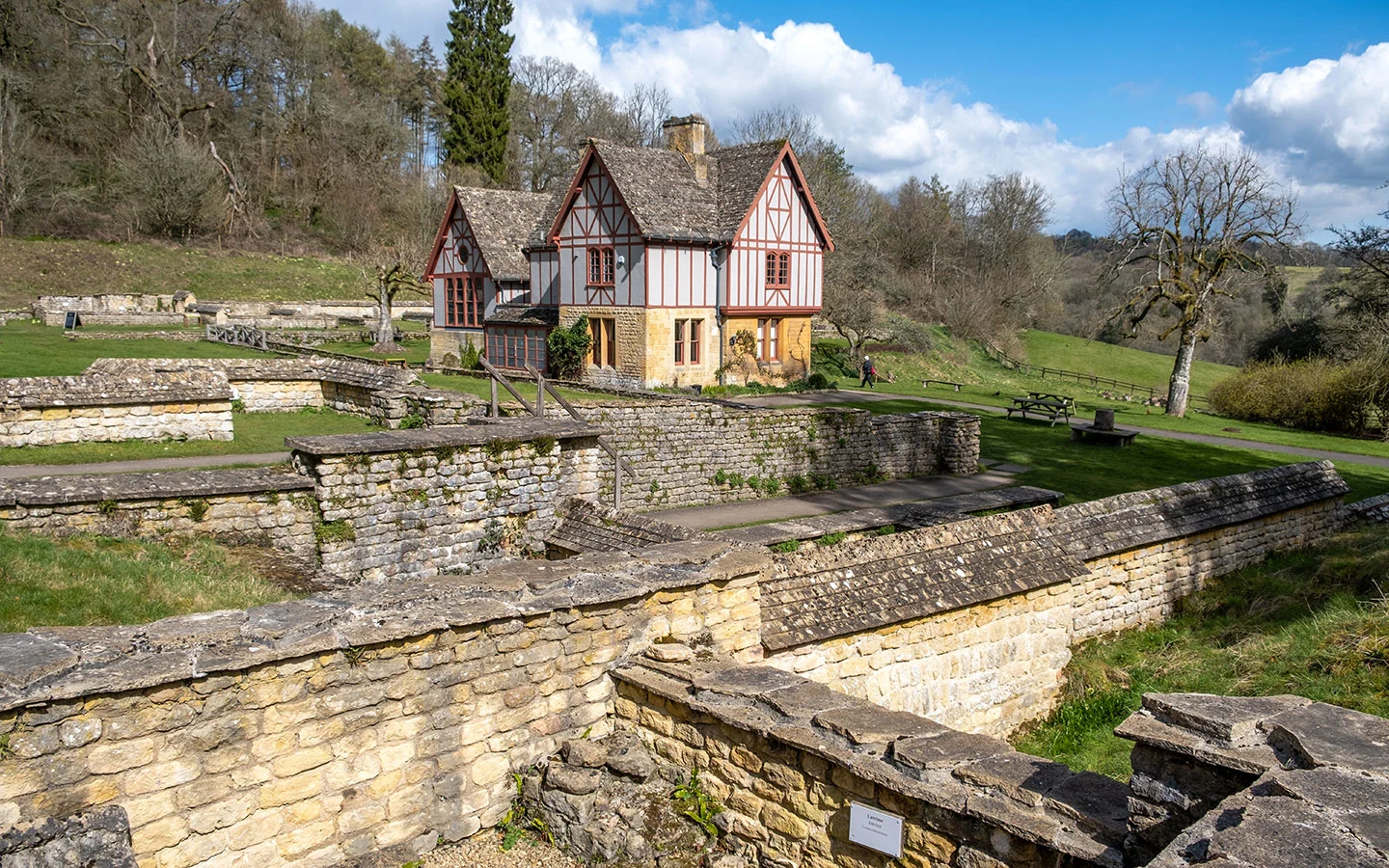
Just outside Chedworth to the south of Cheltenham is one of the most lavish and best-preserved Roman villas in Britain. Chedworth Roman Villa was built in the second century AD, but it wasn’t until the fourth century that it was transformed into a luxurious country retreat. It had all the mod cons – underfloor heating, two bathhouses, elaborate mosaics and even a private toilet.
Chedworth has also thrown up a few surprises, including a Roman mosaic from the fifth century – after the Romans had left Britain and it was thought their villas had already been abandoned. But it was eventually left to crumble, before being rediscovered by a Victorian gamekeeper in 1864.
Chedworth is now looked after by the National Trust. You can see its stunning mosaics in situ, as well as the hypocaust used for heating and the bathhouse. There’s also a museum displaying artefacts found so far, and it’s still being excavated so there are often archaeologists at work.
Entry £14 adults/£7 children (free for National Trust members). Address: Yanworth, near Cheltenham, Gloucestershire GL54 3LJ
North Leigh Roman Villa
North Leigh Roman Villa near Witney in Oxfordshire is another impressive Roman villa rustica. It started life as a modest farmhouse on the banks of the River Evenlode in the first century AD. But it had grown to be one of the largest villas in Roman Britain by the fourth century.
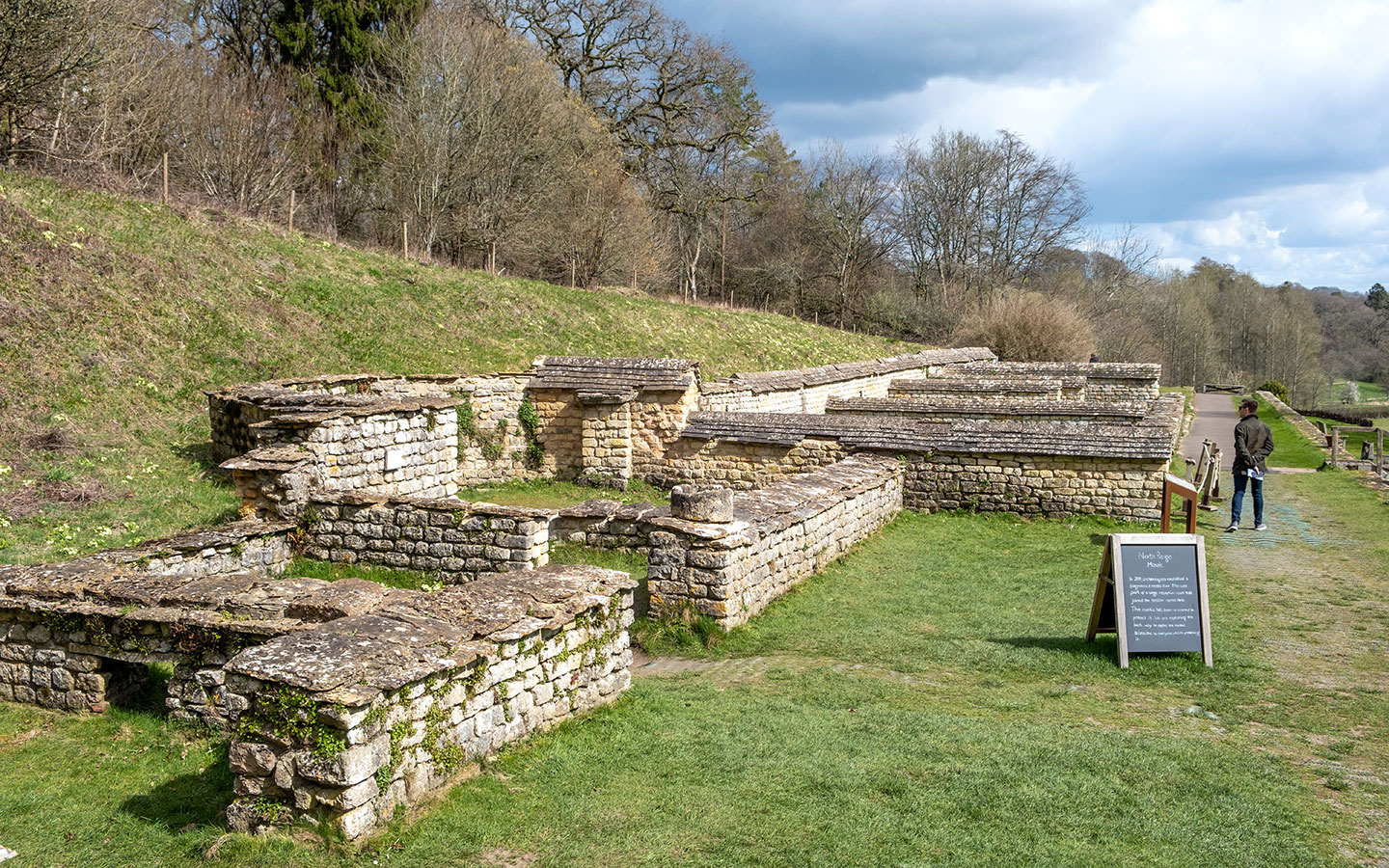
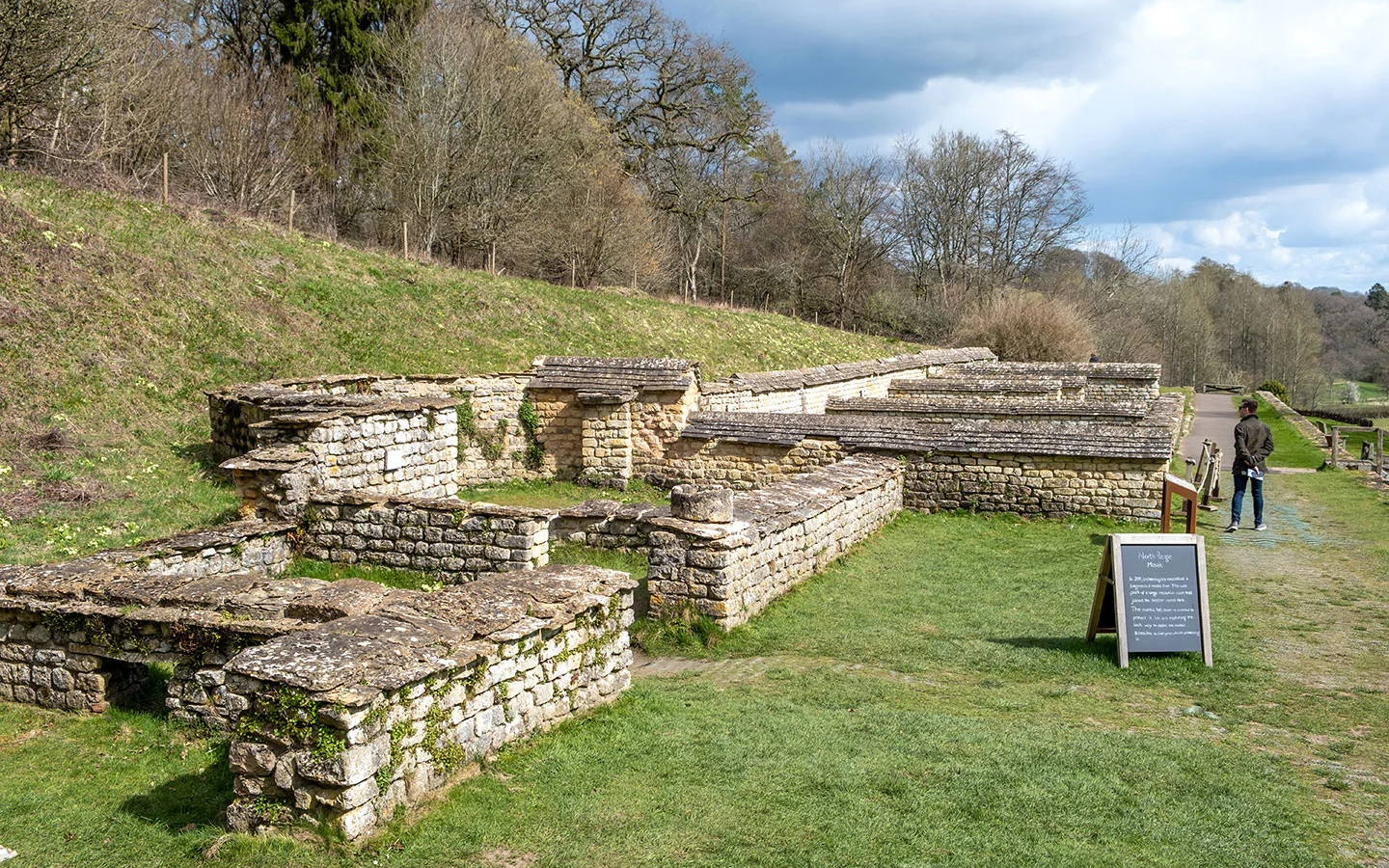
At its peak the villa had over 60 rooms, built on three sides of a courtyard. They included three bath suites, 11 rooms with underfloor heating and 16 mosaic floors. You can see the ruins of the buildings on two sides of the courtyard, and one of the mosaics has survived almost intact.
Today the site is managed by English Heritage and is a peaceful place to explore. Though the mosaics are currently covered to protect them, so you can only see them on special open days.
Free entry. Address: North Leigh, Witney, Oxfordshire OX29 6PZ

Great Witcombe Roman Villa
A third Cotswold Roman villa can be found at Great Witcombe near Birdlip. This villa is also looked after by English Heritage, though it’s currently closed to the public for conservation work.
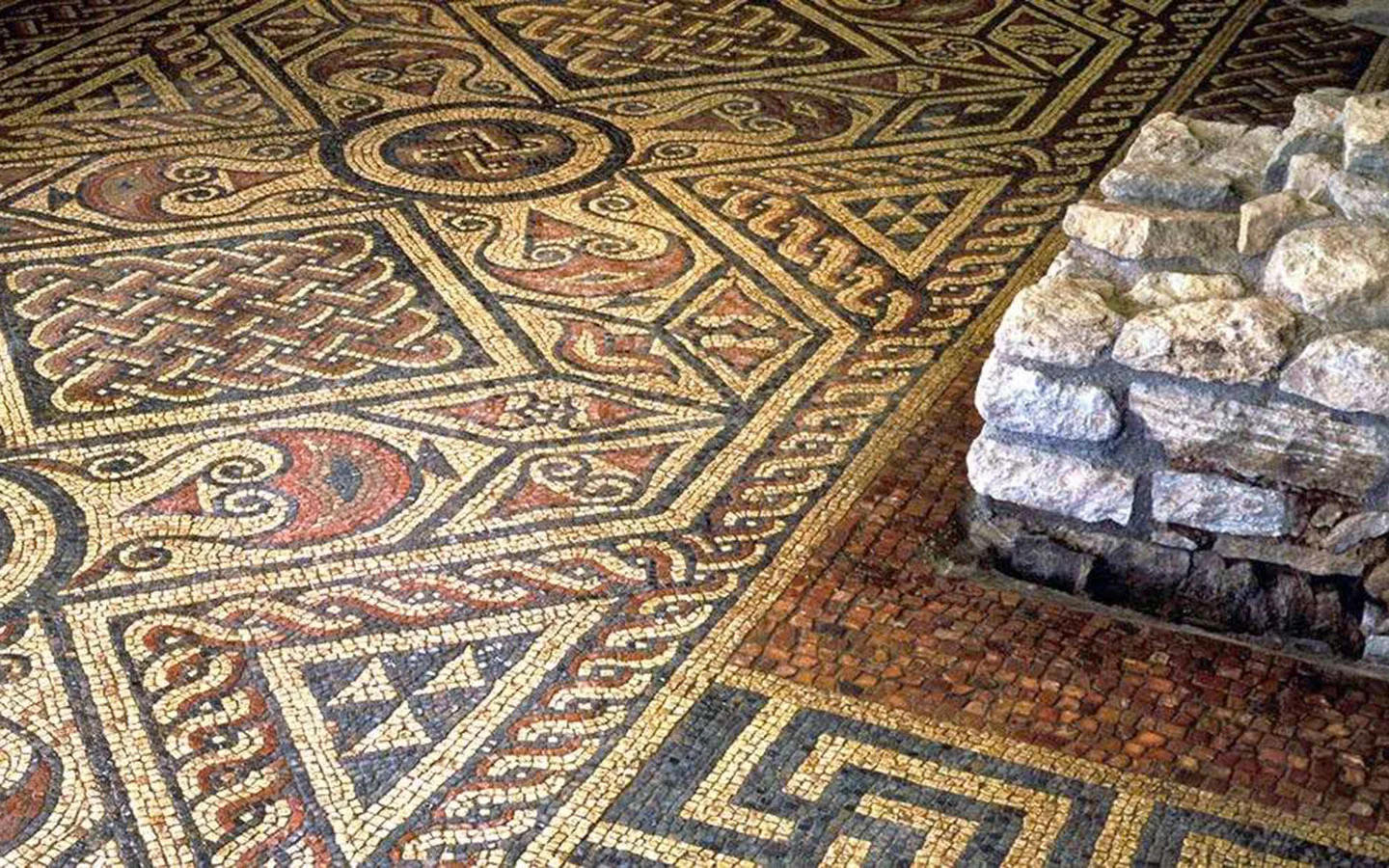
Great Witcombe Roman Villa is thought to have been built around 250 AD as part of a nobleman’s country estate. Its hillside position meant it had to be built on a series of terraces and propped up with buttresses. It was occupied until the fifth century, with baths and a water shrine added.
A lot of the remains have been damaged by the elements over the years, but parts of the original bathhouse still remain. This includes an intricate mosaic floor featuring fish and sea creatures – which unusually includes a stingray in one of the first times they’ve been pictured.
Currently closed for conservation work. Address: Brockworth, Gloucestershire GL3 4TW
Cirencester Amphitheatre
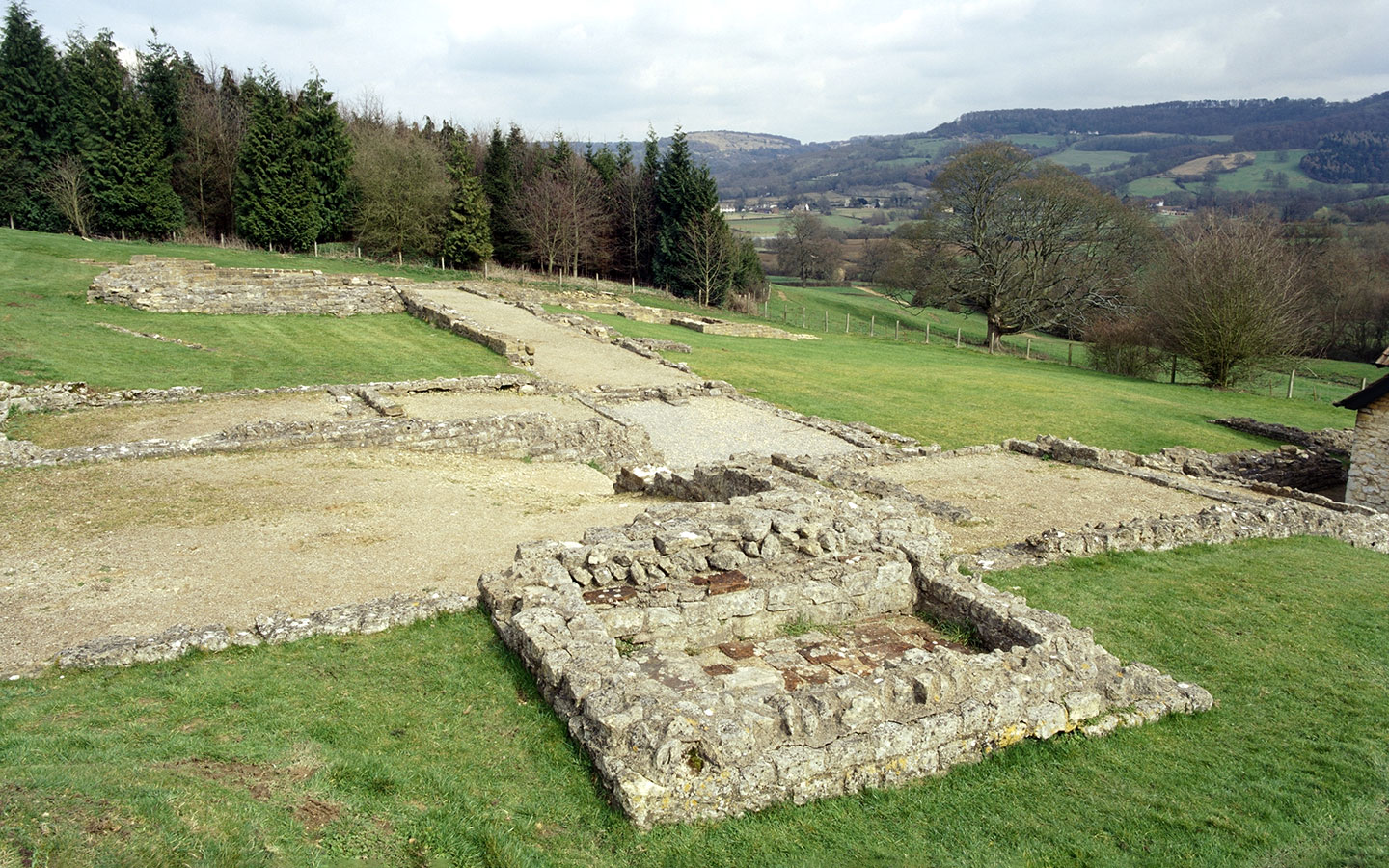
Every important Roman town needs an amphitheatre, and Corinium Dobunnorum’s was built on the site of an old quarry in the early second century. It was one of the largest in Britain, holding 8000 spectators, who came to watch blood sports, gladiatorial contests and executions.
When the Romans left that all stopped, and it was later used as a fortress and then for bull-baiting, giving it the nickname the ‘Bull Ring’. Today it’s grassed over and all that’s left are the earth mounds showing where the original seating banks were, but it still gives you an idea of its scale.
You can also see a short section of Cirencester’s Roman walls in the Abbey Grounds. These were built in the early third century to help defend the town, but were mostly reused in other buildings.
Free entry. Address: Cotswold Avenue, Cirencester, Gloucestershire GL7 1XW


Corinium Museum, Cirencester
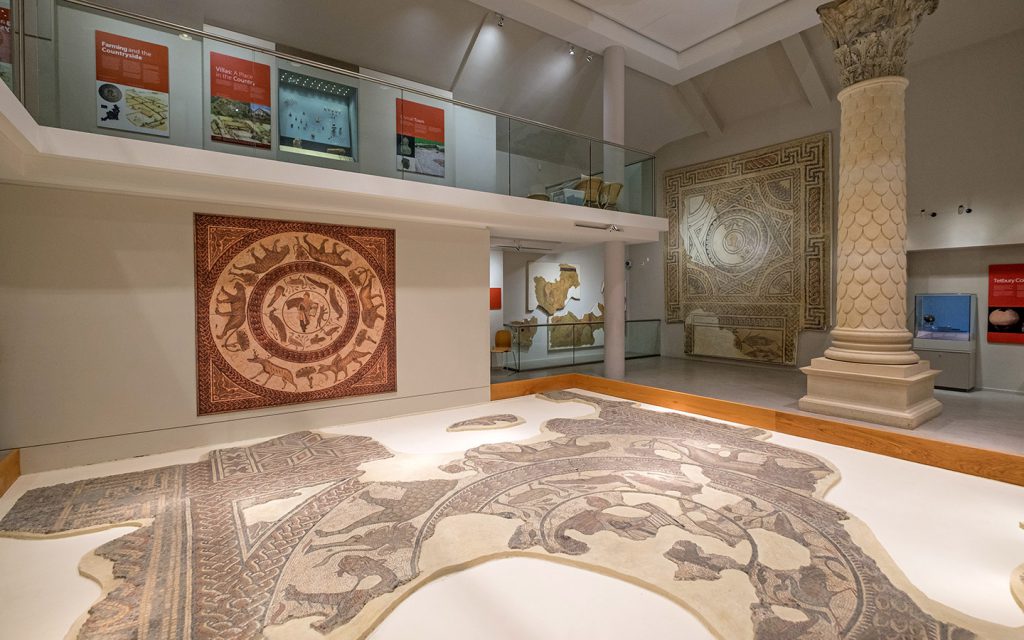
If you want to learn more about the Roman Cotswolds, the award-winning Corinium Museum in Cirencester is a great place to start. You can find out how the Romans lived and worked in Corinium Dobunnorum. There’s also lots of artefacts on display which have been discovered locally.
Among the highlights are reconstructed mosaic floors, gravestones belonging to Roman legionaries and the interiors of a Roman townhouse. You can also see Roman jewellery, coins, pottery and sculptures. And there are hands on activities for kids, as well as regular talks and events.
Entry £8.40 adults/£3.90 children. Address: Park Street, Cirencester GL7 2BX
Other Roman sites in the Cotswolds
There are also a few other Roman sites around the Cotswolds which aren’t open to the public but still have interesting stories to tell – and who knows how many more still to be discovered?
Spoonley Wood Roman Villa
Deep in woodland near Sudeley Castle lie the remains of a Roman courtyard villa. Mosaics at Spoonley Wood Roman Villa were uncovered by workmen in 1882. And excavations uncovered coins, tools and pottery, along with a marble statue of Bacchus which is now in the British Museum.
Sheds were later built over the remaining mosaics to protect them, which have now collapsed and are overgrown. But you can still see a mosaic hidden under a plastic sheet. And a fragment of the mosaic along with Roman coins found nearby are on display at Winchcombe Museum.


Woodchester Roman Villa
Beneath a churchyard in Woodchester near Stroud is one of the largest and most elaborate Roman mosaics ever made – but you can’t see it. The Orpheus Pavement was laid in 325 AD using 1.5 million pieces of stone and features Orpheus surrounded by animals and geometric patterns.
After it was rediscovered in 1693, it was uncovered for the public to see every ten years until 1973. But huge crowds meant villagers decided to keep it buried permanently to protect it. Instead an exact replica was made by brothers Bob and John Woodward. It took over a decade to make, but was sold at auction to a mystery bidder in the 1990s and no one knows for sure where it is now.


Air Balloon roundabout
Most recently, roadworks on the A417 near Birdlip have unearthed a new hoard of Roman artefacts. Over 40 hectares have been excavated by archaeologists, who discovered a new Roman settlement. As it’s on the route of the Roman road Ermin Street it’s thought it was once a rest stop.
Roman coins, jewellery and over 420kg of Roman pottery have been uncovered. But the most impressive find is a rare bronze figurine of Cupid, with fewer than 50 like it in the UK.


Map of Roman sites in the Cotswolds


* This site contains affiliate links, where I get a small commission from purchases at no extra cost to you.
Save for later


You might also like