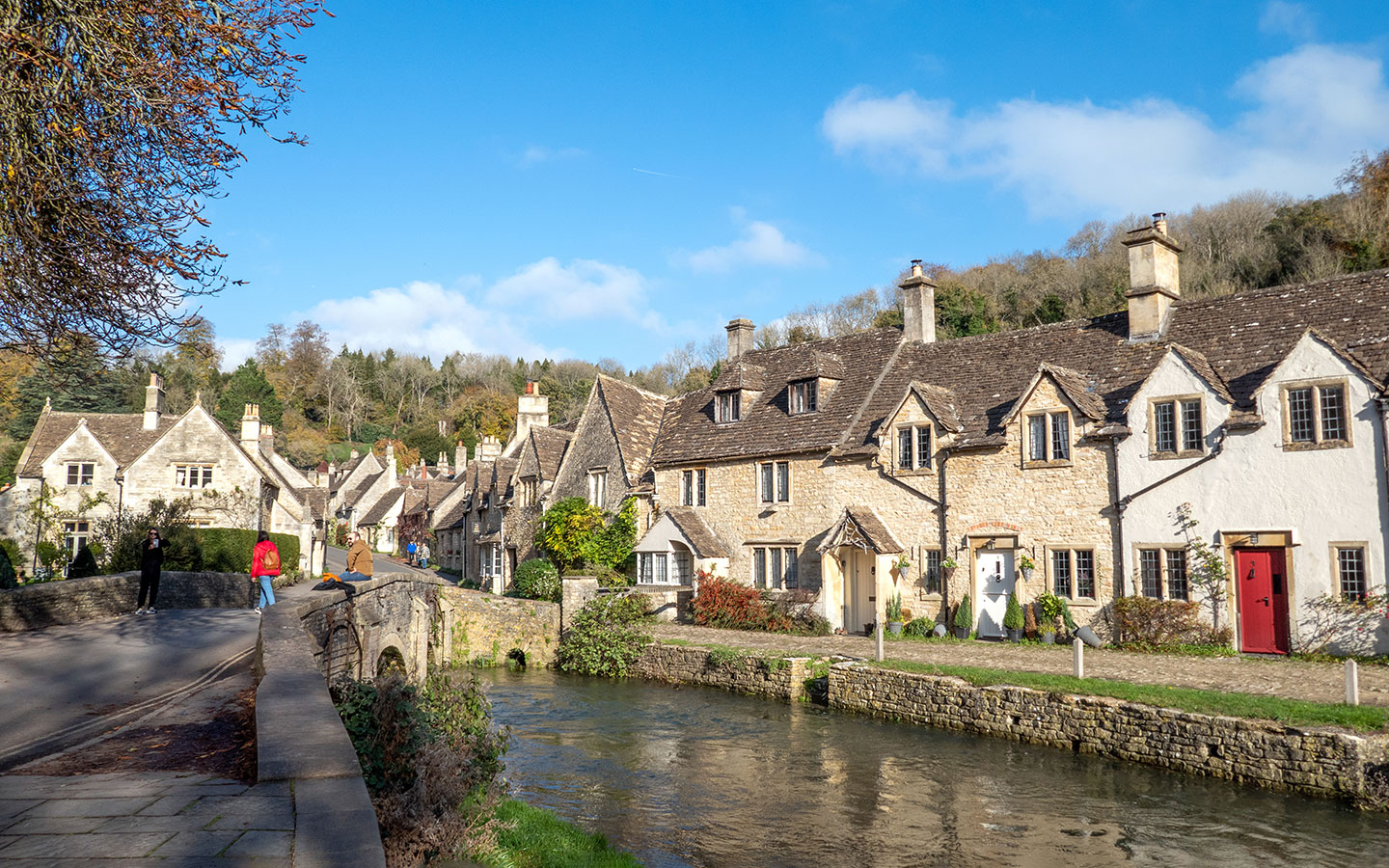
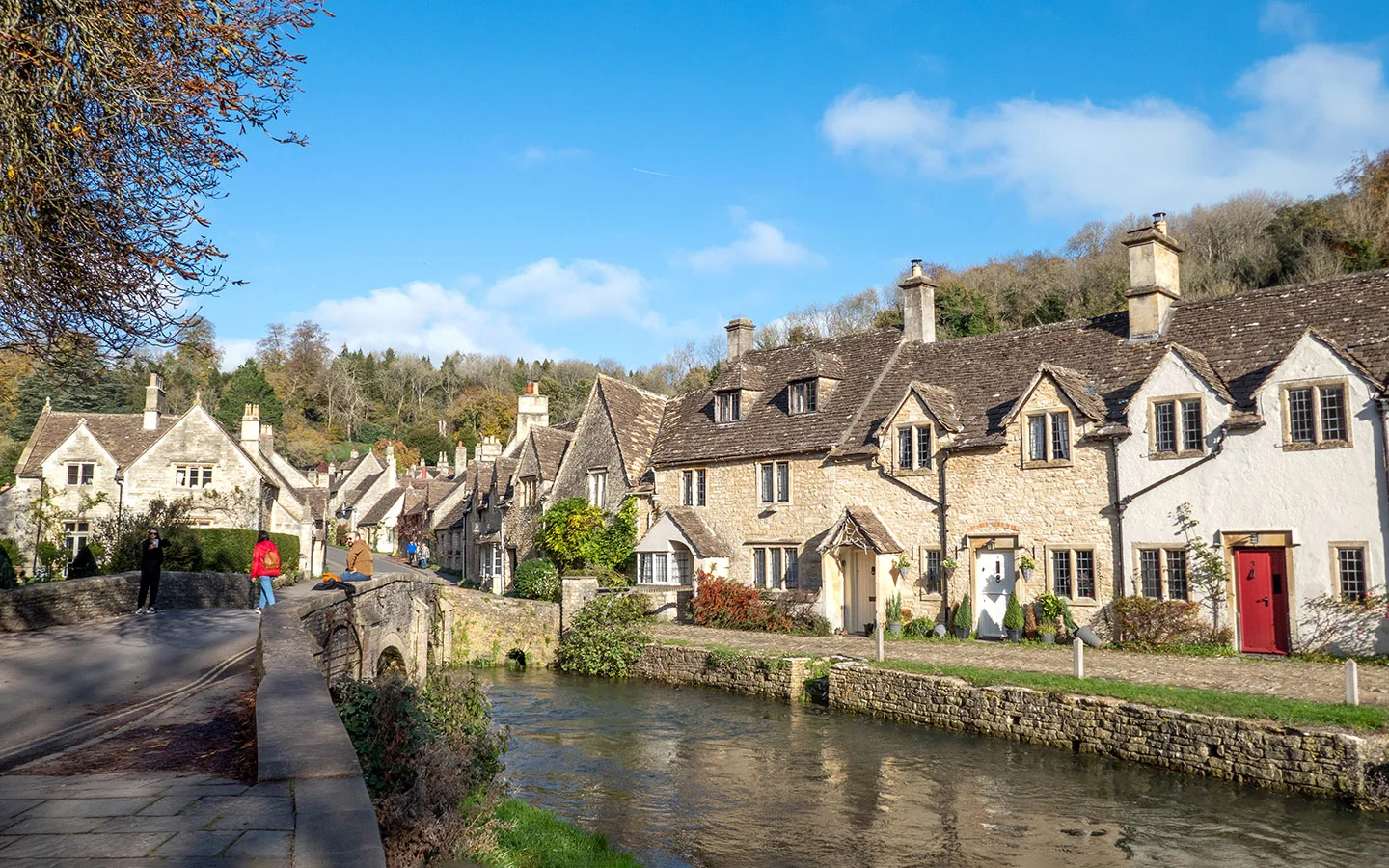
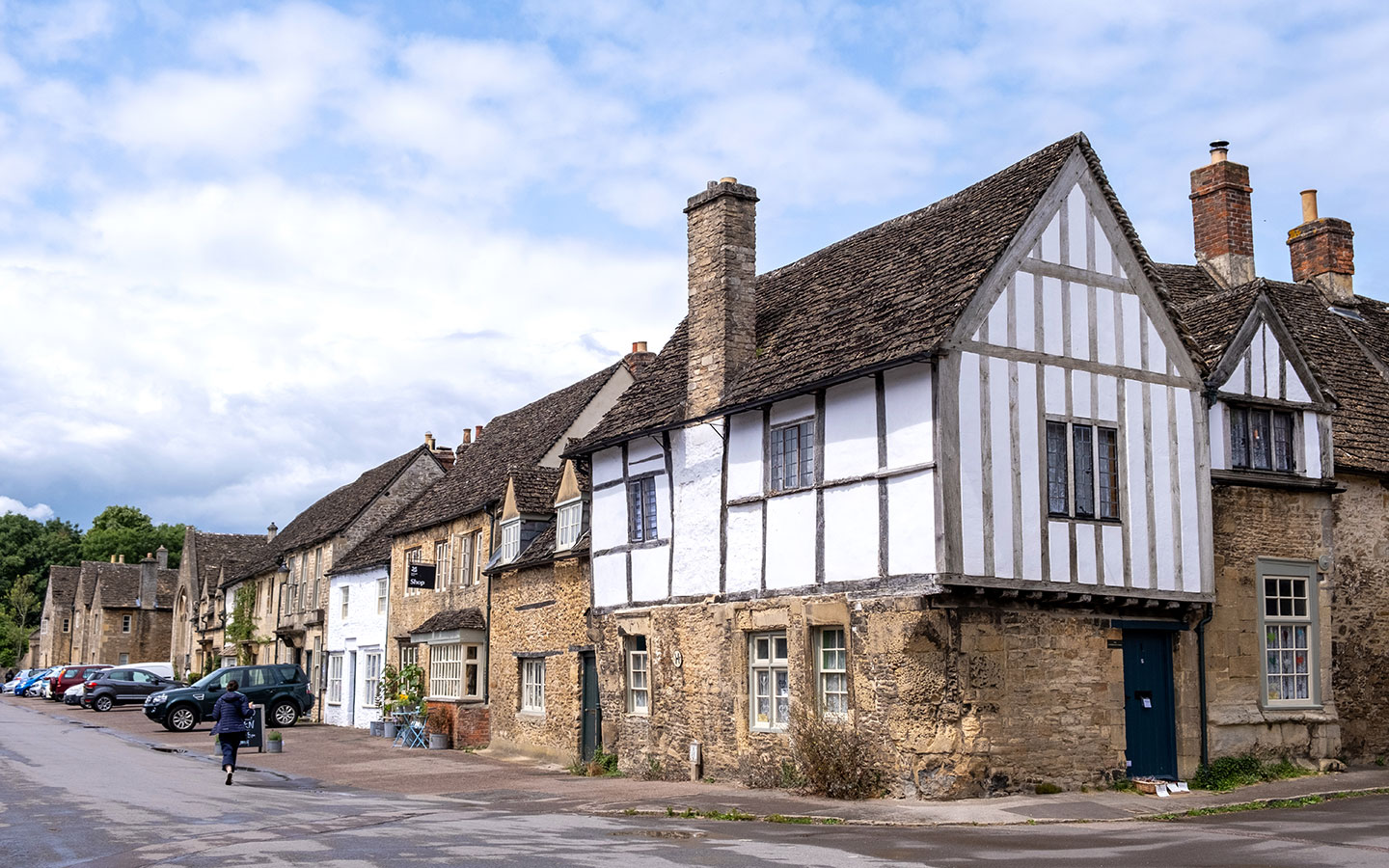
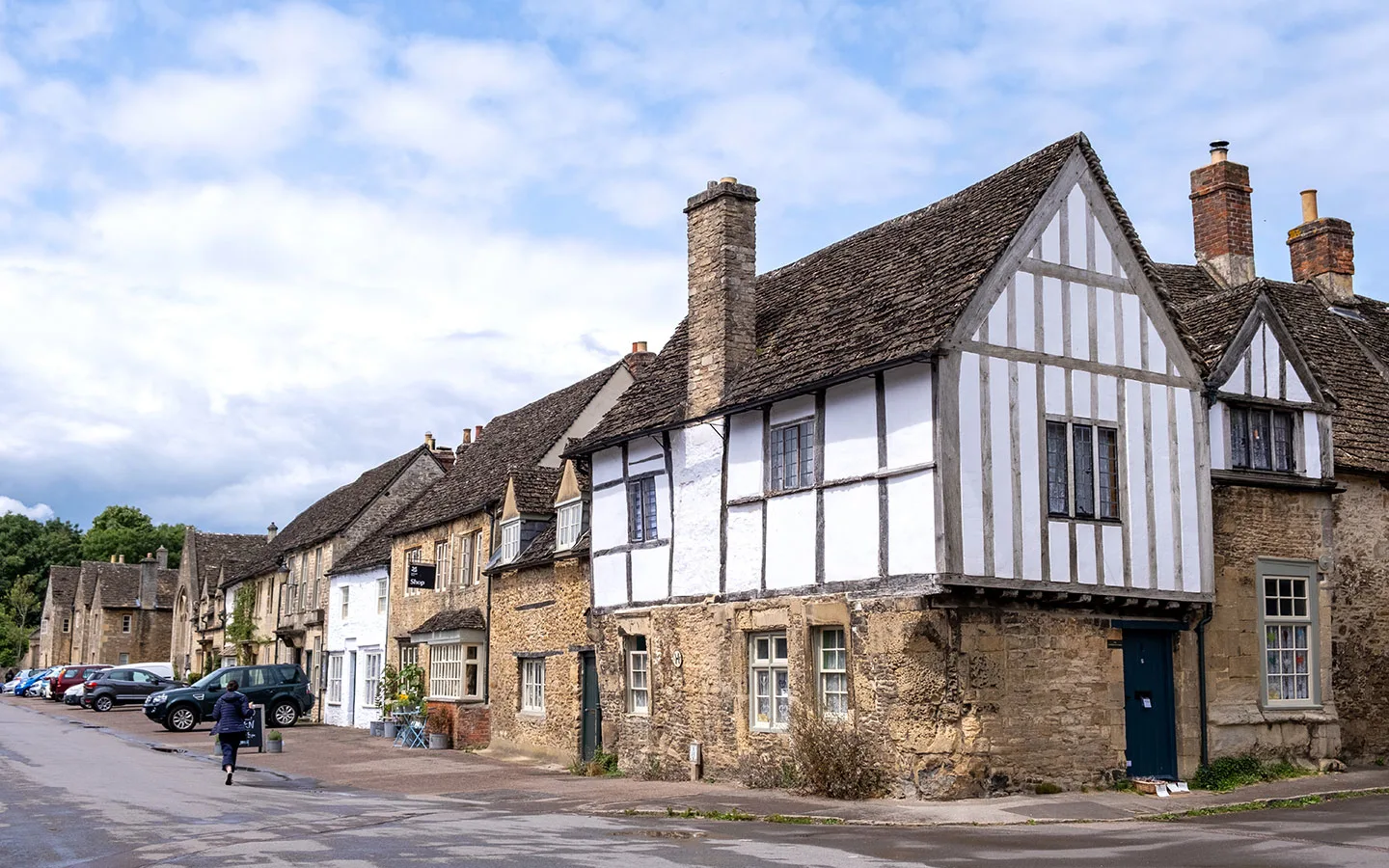
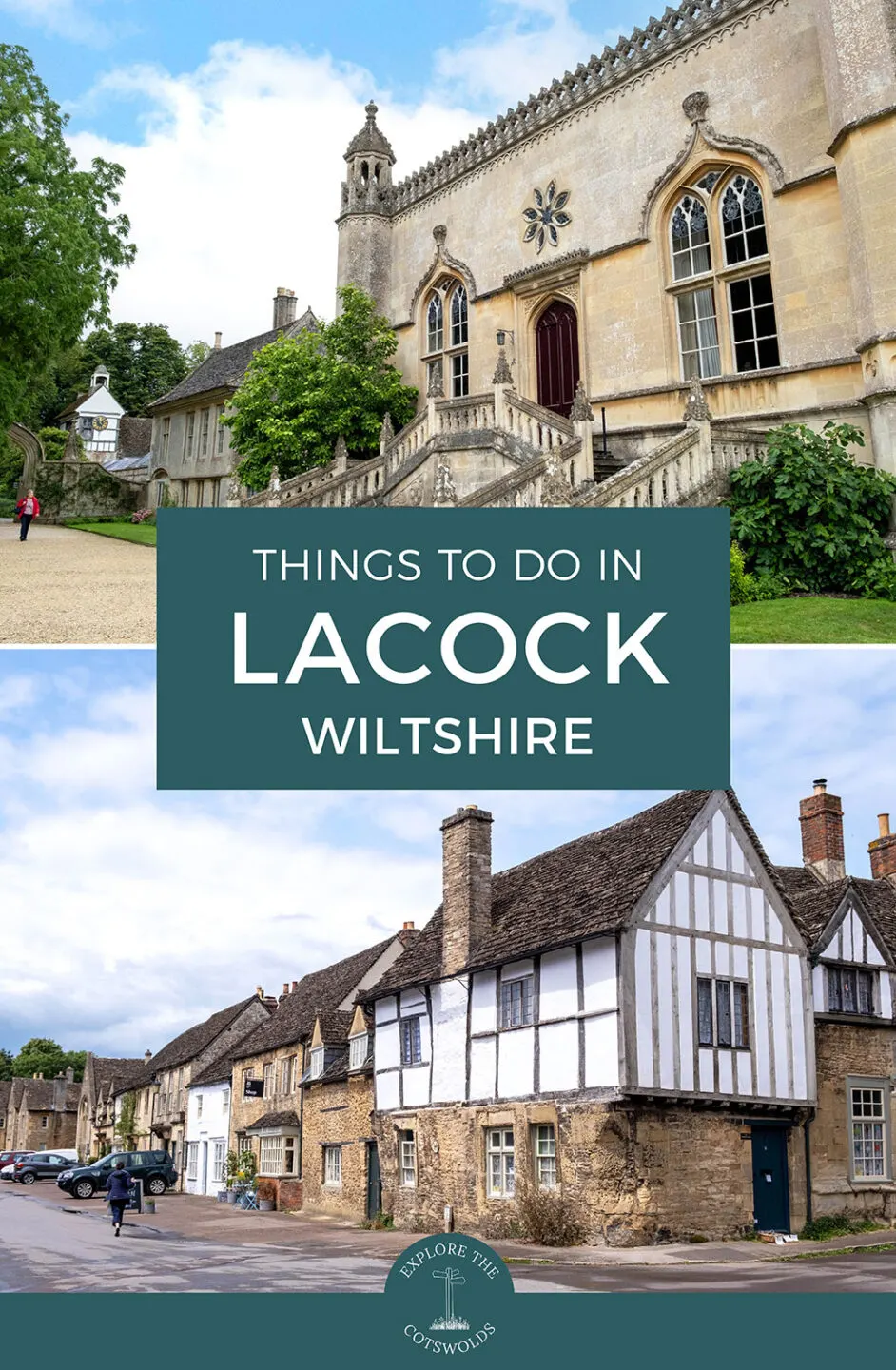
With its half-timbered and thatched buildings, the Wiltshire village of Lacock to the south of the Cotswolds looks a lot like it would have done 200 years ago. It’s owned by the National Trust who’ve helped preserve its charms, and made it a popular film and TV location for Downton Abbey, Harry Potter and more. But what else does Lacock have to offer? Plan your visit with our local expert’s guide, featuring the best things to do in Lacock, as well as where to eat, drink and stay.
Lacock’s history
The first settlers in Lacock were the Saxons, who called it lacuc or ‘little stream’. But it really grew after the building of Lacock Abbey in 1232. The abbey was founded by Ela, Countess of Salisbury, one of the era’s most powerful women and the only female High Sheriff of Wiltshire.
The abbey was a Augustinian nunnery, with Ela as its first abbess. But it was closed down in 1539 during Henry VIII’s Dissolution of the Monasteries. The buildings were sold to Sir William Sharington who turned it into a Tudor mansion, tearing down the abbey church and using the stone to build an octagonal tower. But the cloisters and some original sections still remained.
The house passed down to Sharington’s descendants the Talbots, including John Ivory Talbot who added the mock-Gothic Great Hall. And later photography pioneer William Henry Fox Talbot captured the first photographic negative when he was living in the house in 1835.
William Henry’s great-niece Matilda Talbot inherited the abbey and surrounding village in 1916. But in 1944 she donated Lacock to the National Trust. They still own it today, renting the houses out to tenants, conserving the abbey and making sure the village’s period details are preserved.
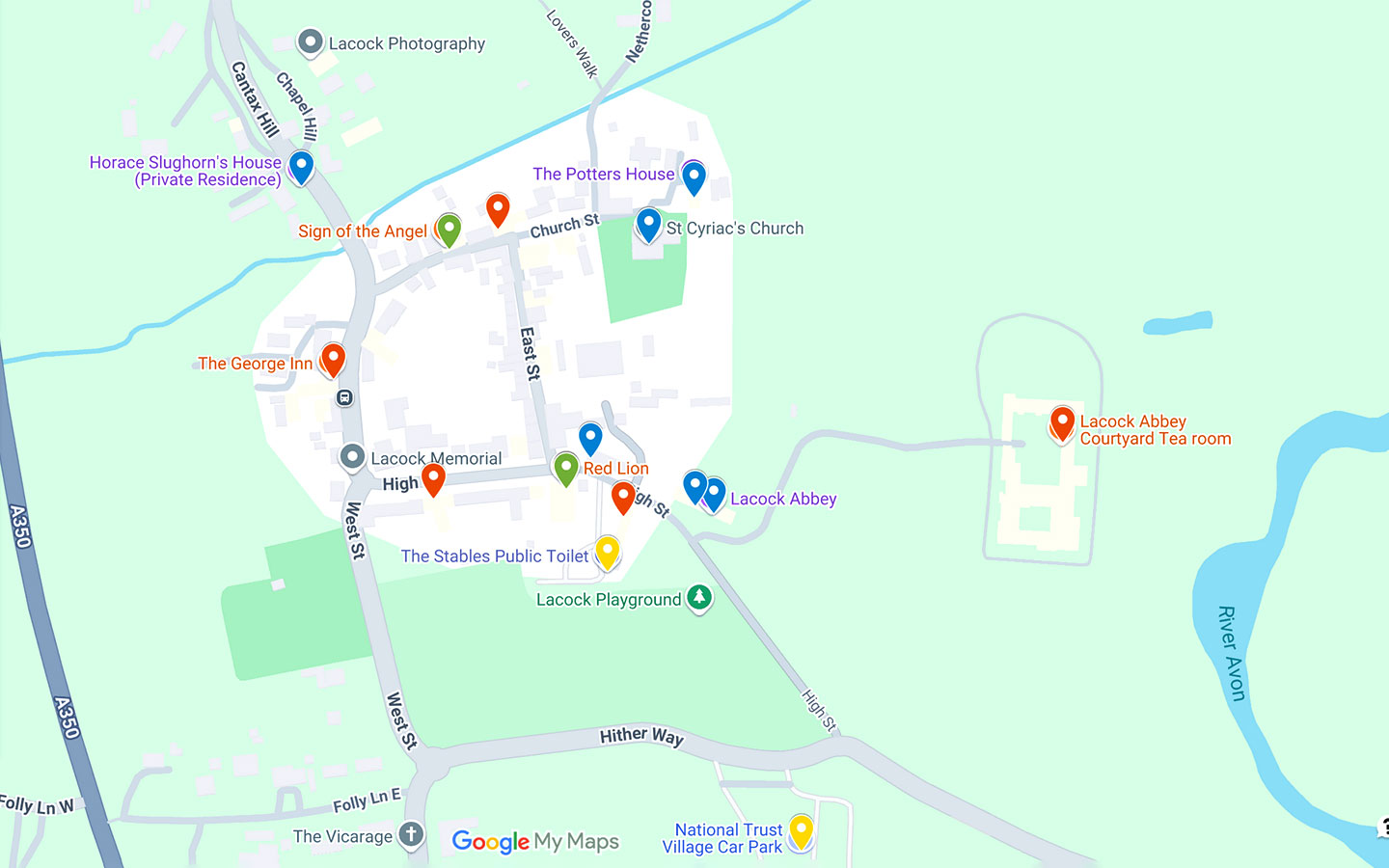
Map of Lacock

Things to do in Lacock
Lacock Abbey
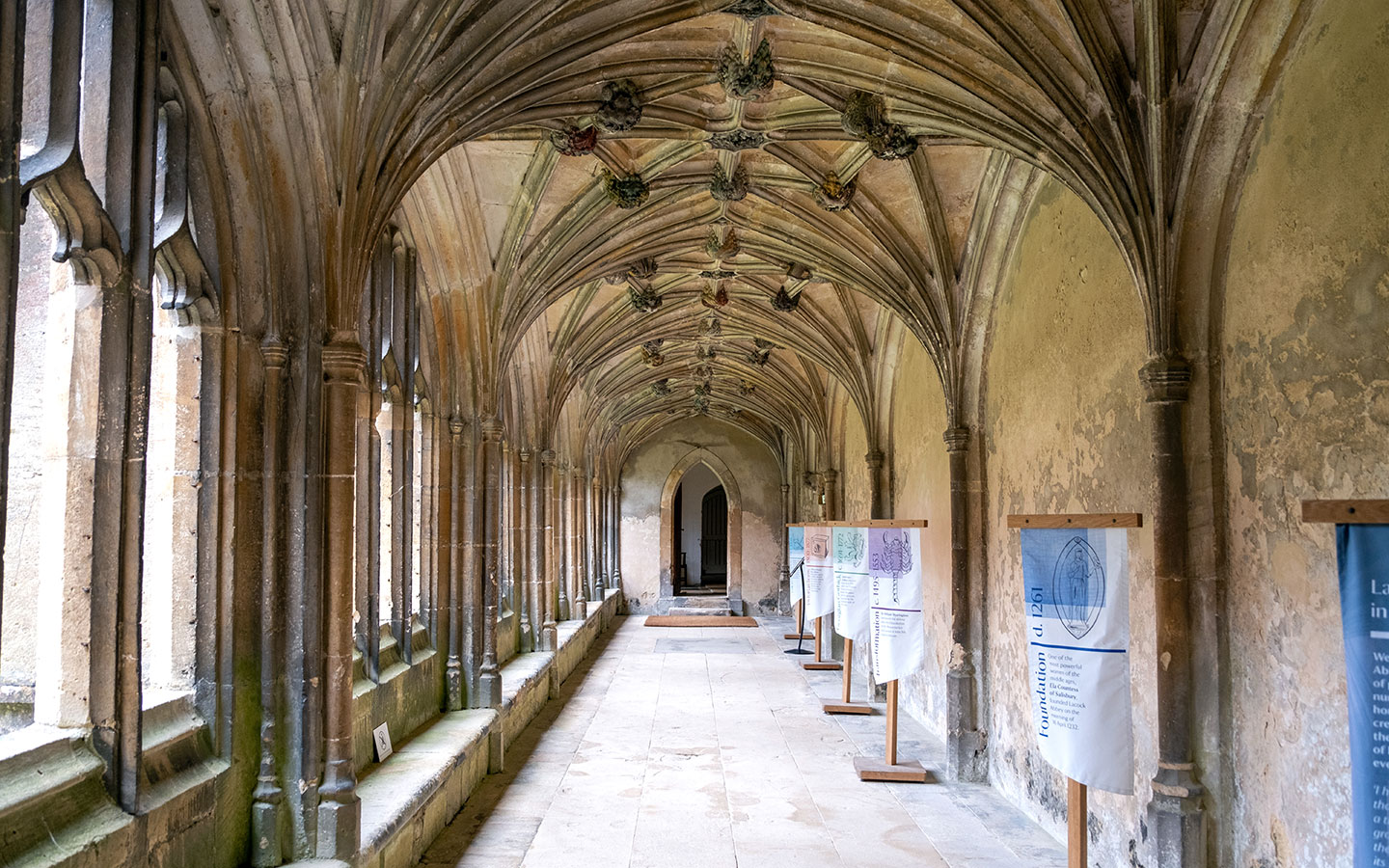
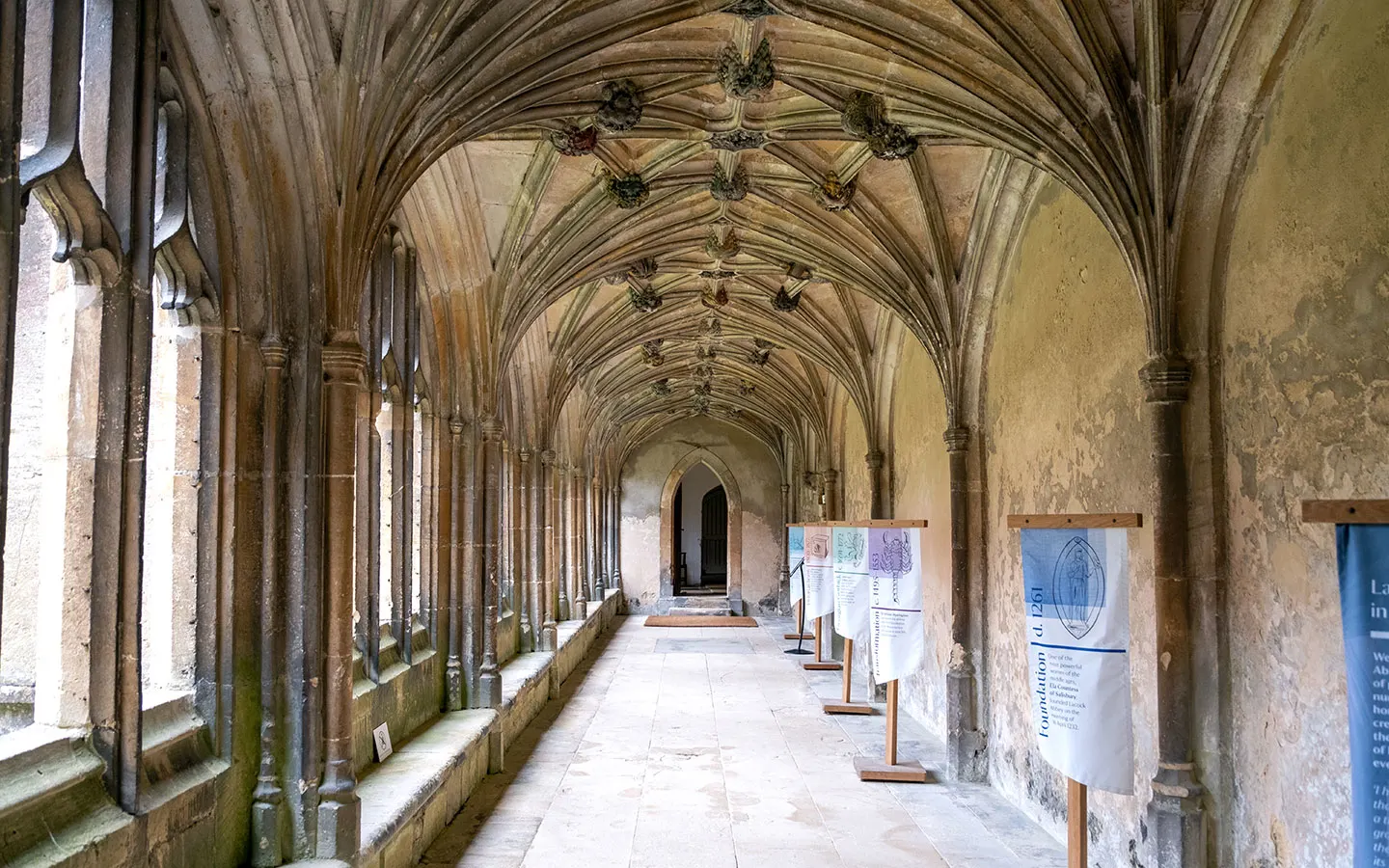
Visiting Lacock Abbey is a journey through different eras of history (entry £20 adults/£10 children, free for National Trust members). Oldest are the atmospheric medieval cloisters, where you can imagine the Augustinian nuns walking beneath the stone-vaulted ceilings 800 years ago.
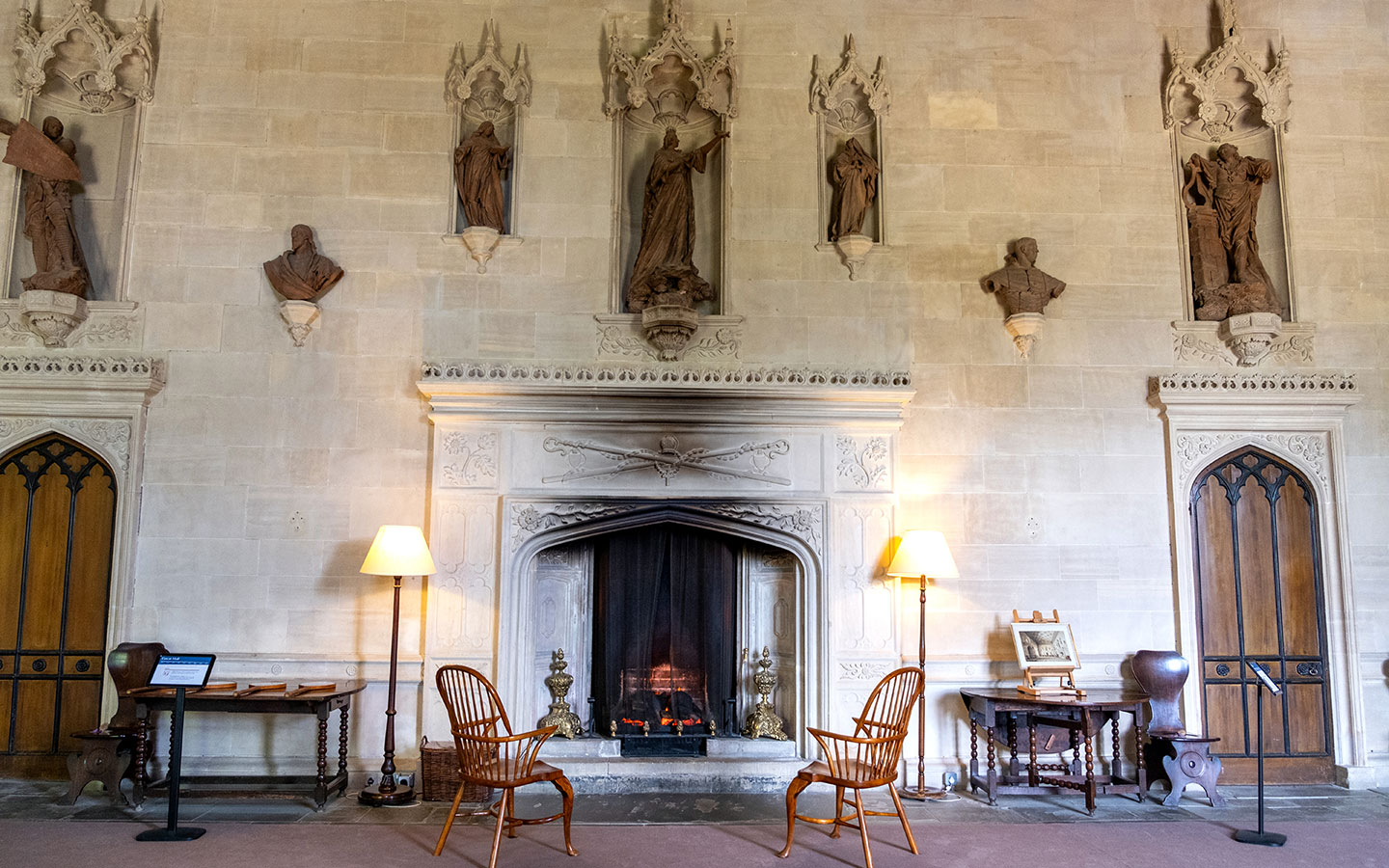
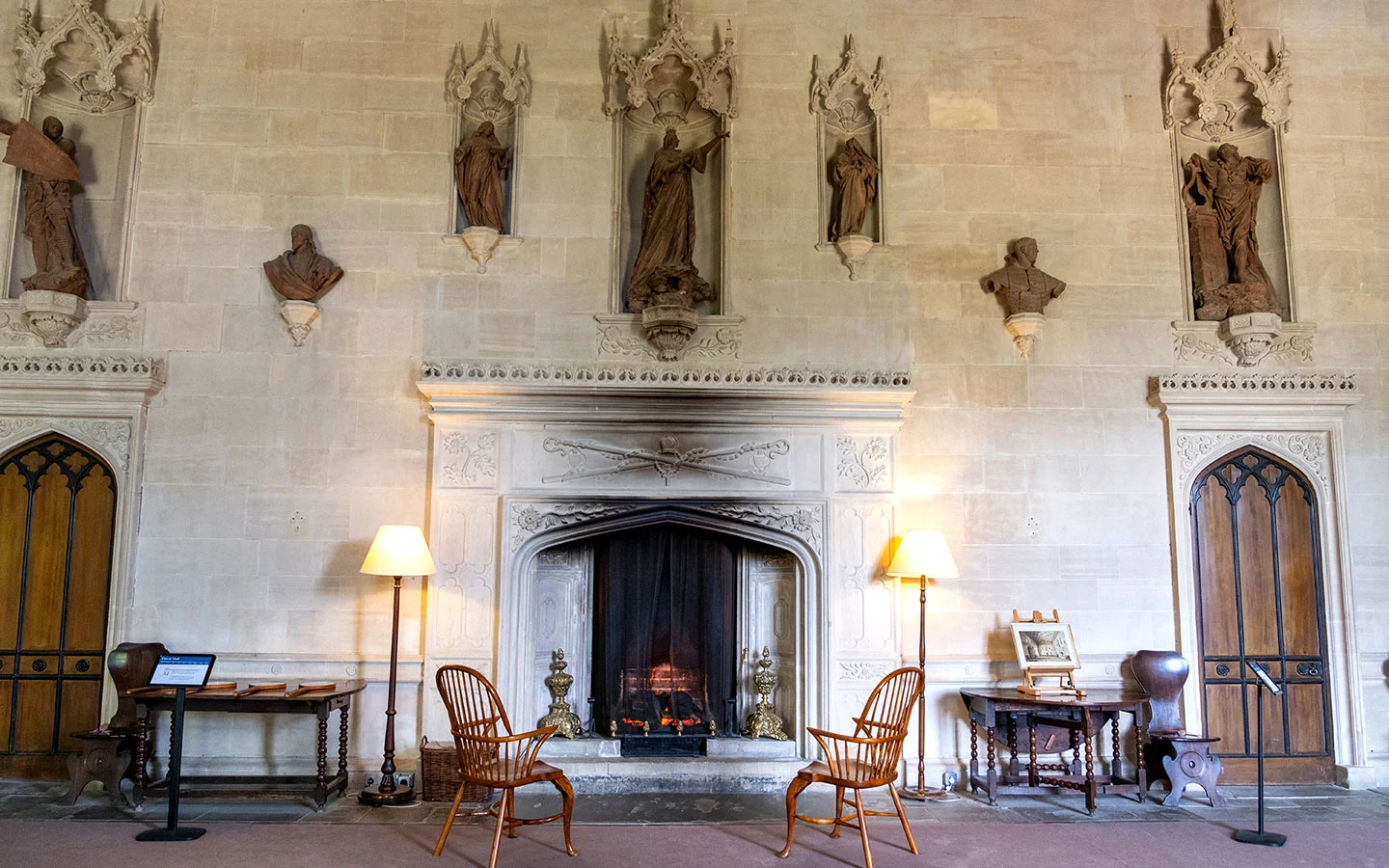
The house itself dates from the Tudor period, but it’s been added to and adapted over the years. The Gothic Great Hall features an impressive fireplace, carved statues and coats of arms. It’s well worth a visit at Christmas when the hall is decked out with traditional decorations and a huge tree.
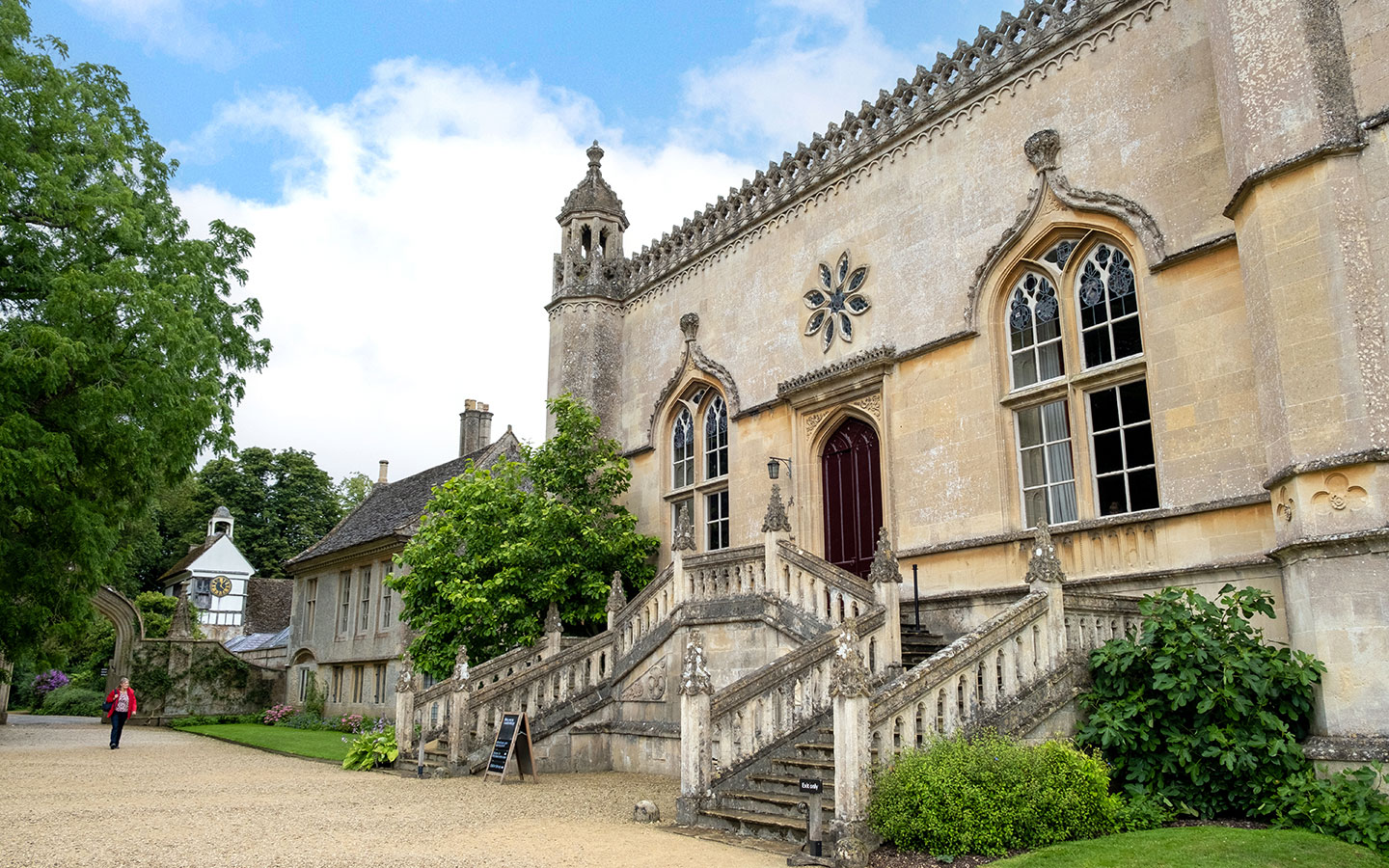
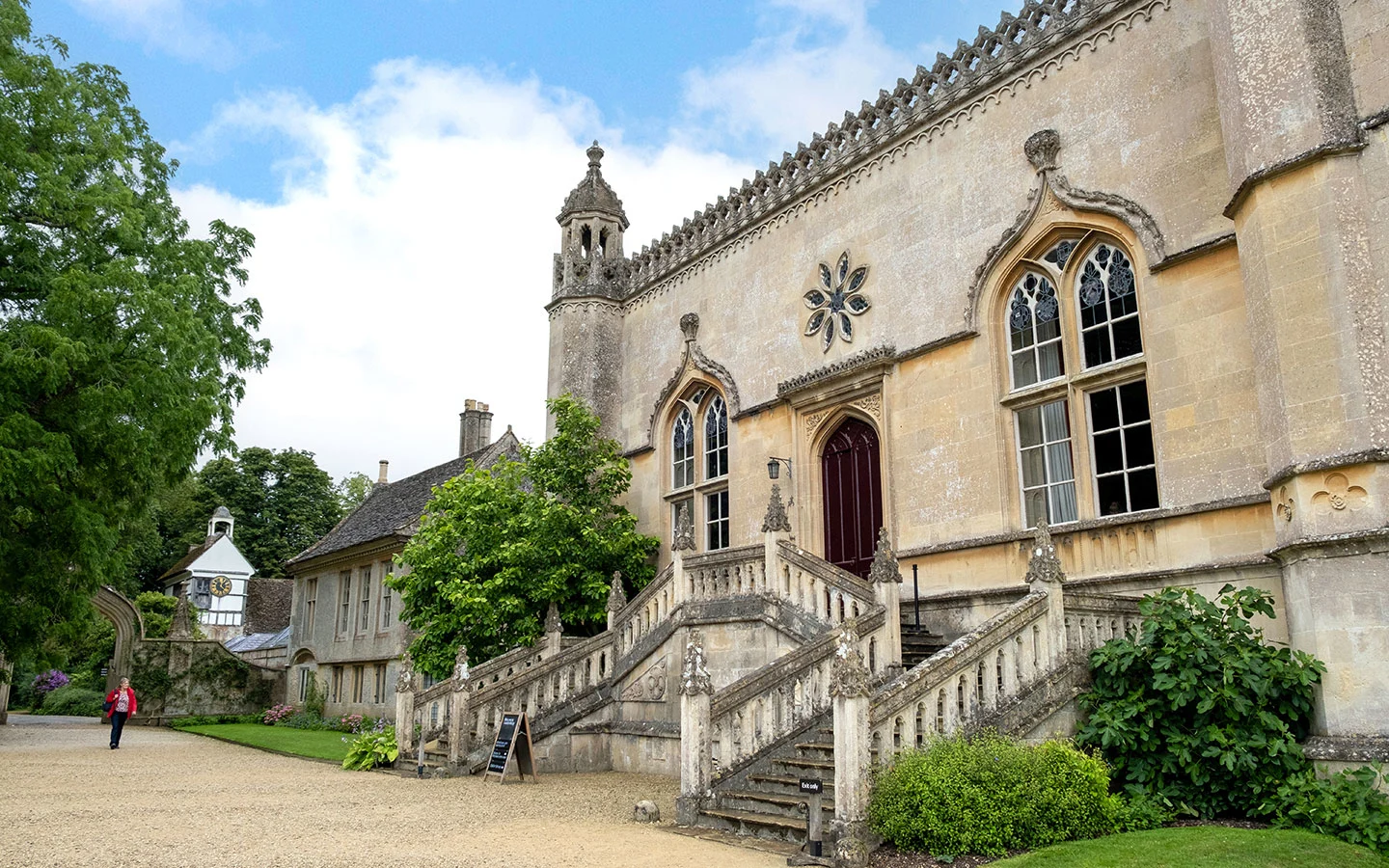
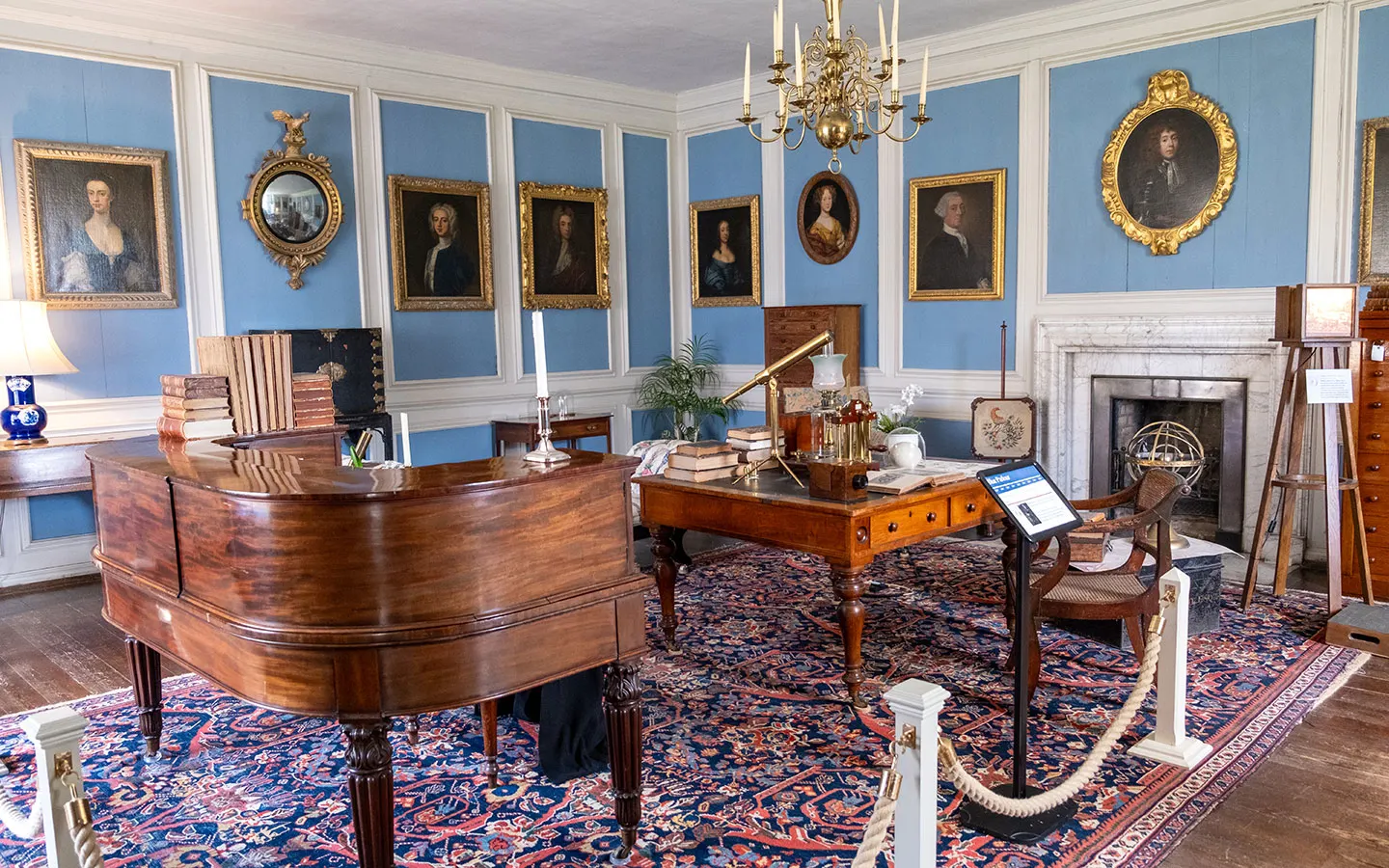
The rest of the house is Victorian in style, left as it would have been when the Fox Talbot family lived here, with Murano glass chandeliers, artworks and antiques. You can tour the different rooms, including William Henry Fox Talbot’s study with its maps and scientific instruments.
There’s also the Tudor stables, which still have the remains of the original brewhouse and bakehouse. And plenty of gardens to stroll around (dogs on short leads welcome), including William’s mother Lady Elizabeth’s rose garden, a wildflower meadow, orchard and botanic garden.

The Fox Talbot Museum of Photography
Tickets for the abbey also include entry to the Fox Talbot Museum of Photography. This exhibition inside 16th-century former stable block tells the story of William Henry Fox Talbot. This scientist and inventor went on a quest to work out how to ‘fix’ images on paper, developing a new process to create negatives. And his first photograph was of a window in Lacock Abbey in 1835.
This negative is the oldest in the world, and is on display alongside cameras, projectors and photographs from the early days of photography – including Fox Talbot’s ‘mousetrap’ camera. And regular exhibitions in the gallery upstairs showcase the work of different photographers.


St Cyriac’s Church
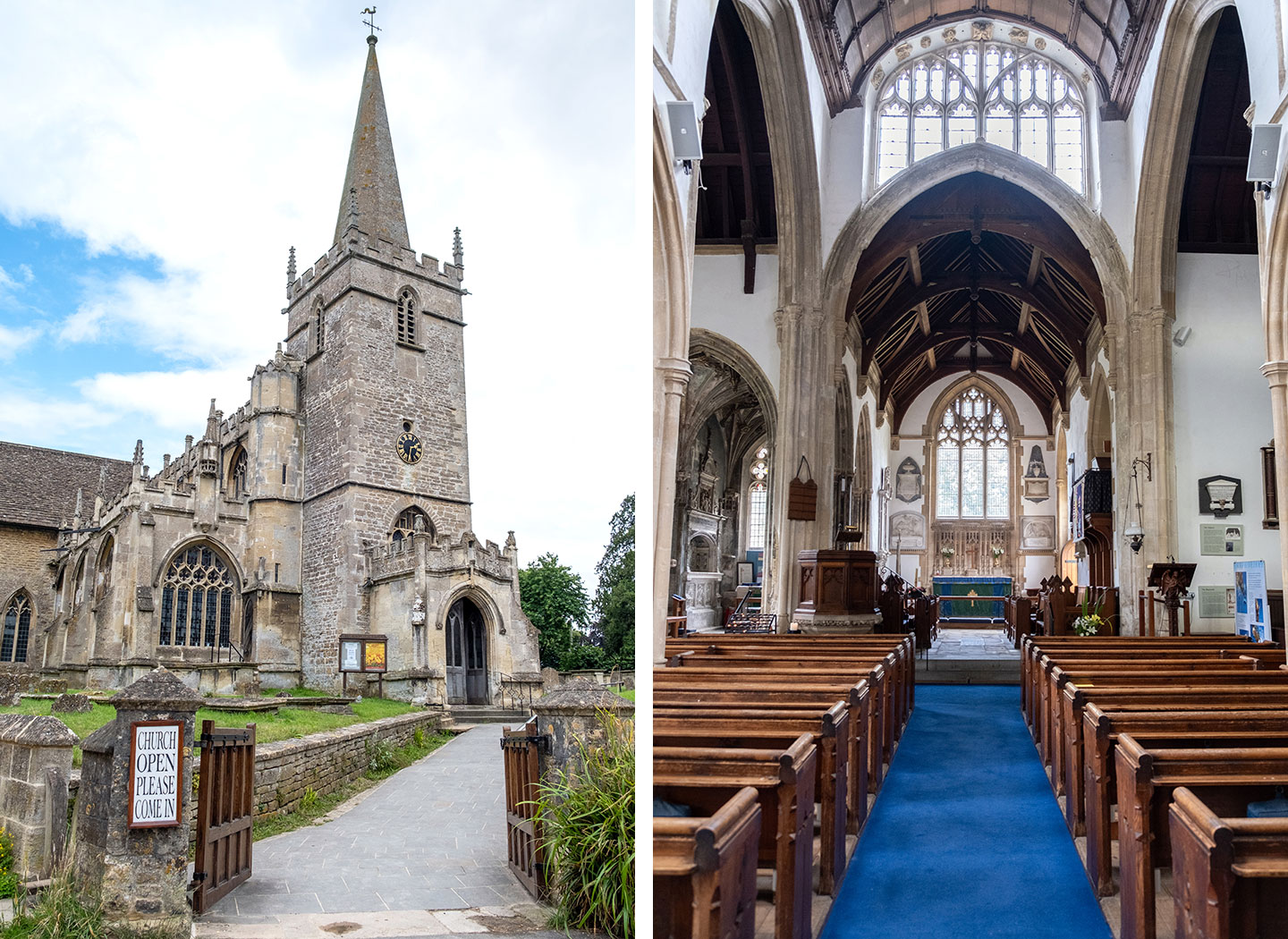
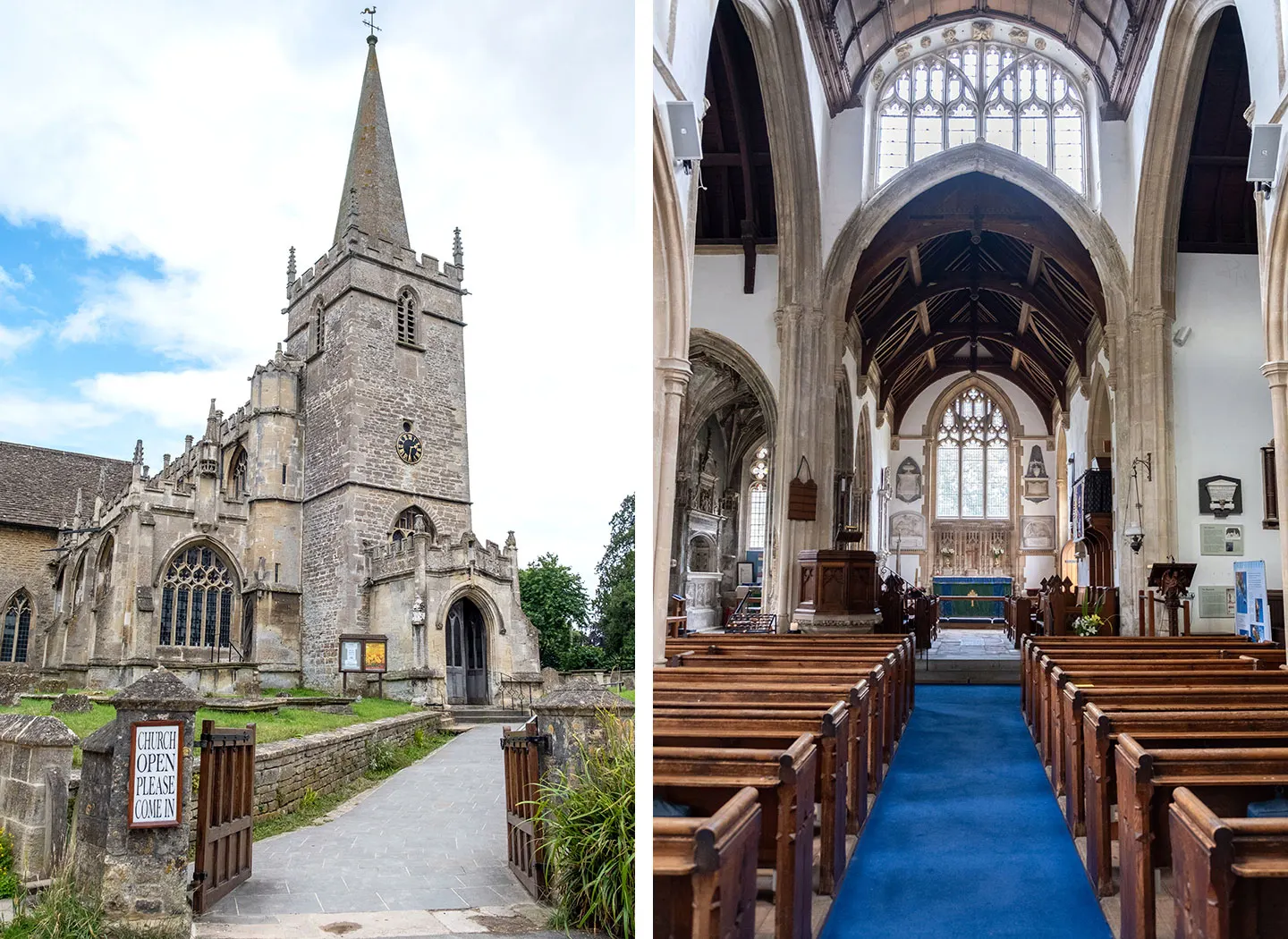
Lacock’s St Cyriac’s Church dates back to the Norman period, though it’s thought there was a Saxon place of worship on the site before then. Much of the church today dates from the 15th century when Lacock was flush with money from the wool trade, with a few more modern additions.
Inside there are impressive vaulted ceilings in the Lady Chapel, still with traces of original medieval paintwork. There are also monuments to important local families, including the 16th-century tomb of William Sharington. Though William Henry Fox Talbot isn’t buried here – the graveyard was full by the time he died so his grave is in Lacock’s new cemetery on West Street.
Filming locations
Lacock’s historic charms have made it a popular location for period films and TV shows. It featured in the first Downton Abbey film (2018), TV series Cranford (2007), and Pride and Prejudice (1995), with the Red Lion pub used as the ballroom where Elizabeth Bennet first meets Mr Darcy.
But Lacock is best known for its starring role in three Harry Potter films, as well as the spin-off Fantastic Beasts: The Crimes of Grindelwald. There are a few different locations you can see around Lacock Abbey, including the Cloisters which were used for scenes in Hogwarts corridors.


In Harry Potter and the Philosopher’s Stone, the abbey’s Warming Room – once the only room where nuns were allowed a fire to keep warm – became Professor Quirrel’s Defence Against the Dark Arts Classroom. The Sacristy was Snape’s Potions Classroom. And the Chapter House was where Harry discovered the Mirror of Erised, as well as a study hall in The Chamber of Secrets.
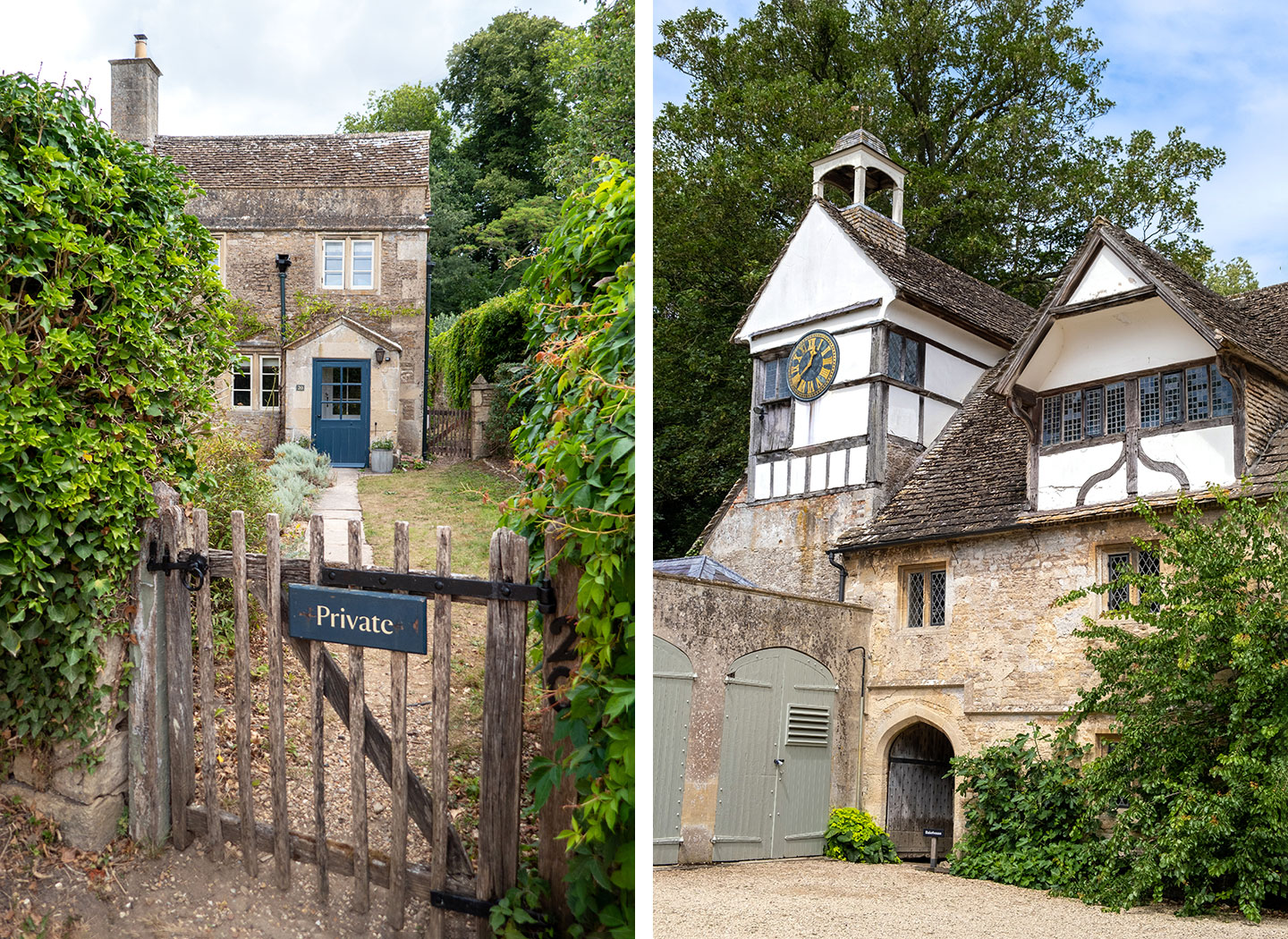
There are also locations around the village, including Harry’s parents house from a flashback scene in The Philosopher’s Stone on Church Street. And Slughorn’s House from The Half-Blood Prince can be found on Cantax Hill. Both are private residences though so don’t get too close.
Find a map of Lacock film locations on the National Trust website.

Lacock Tithe Barn
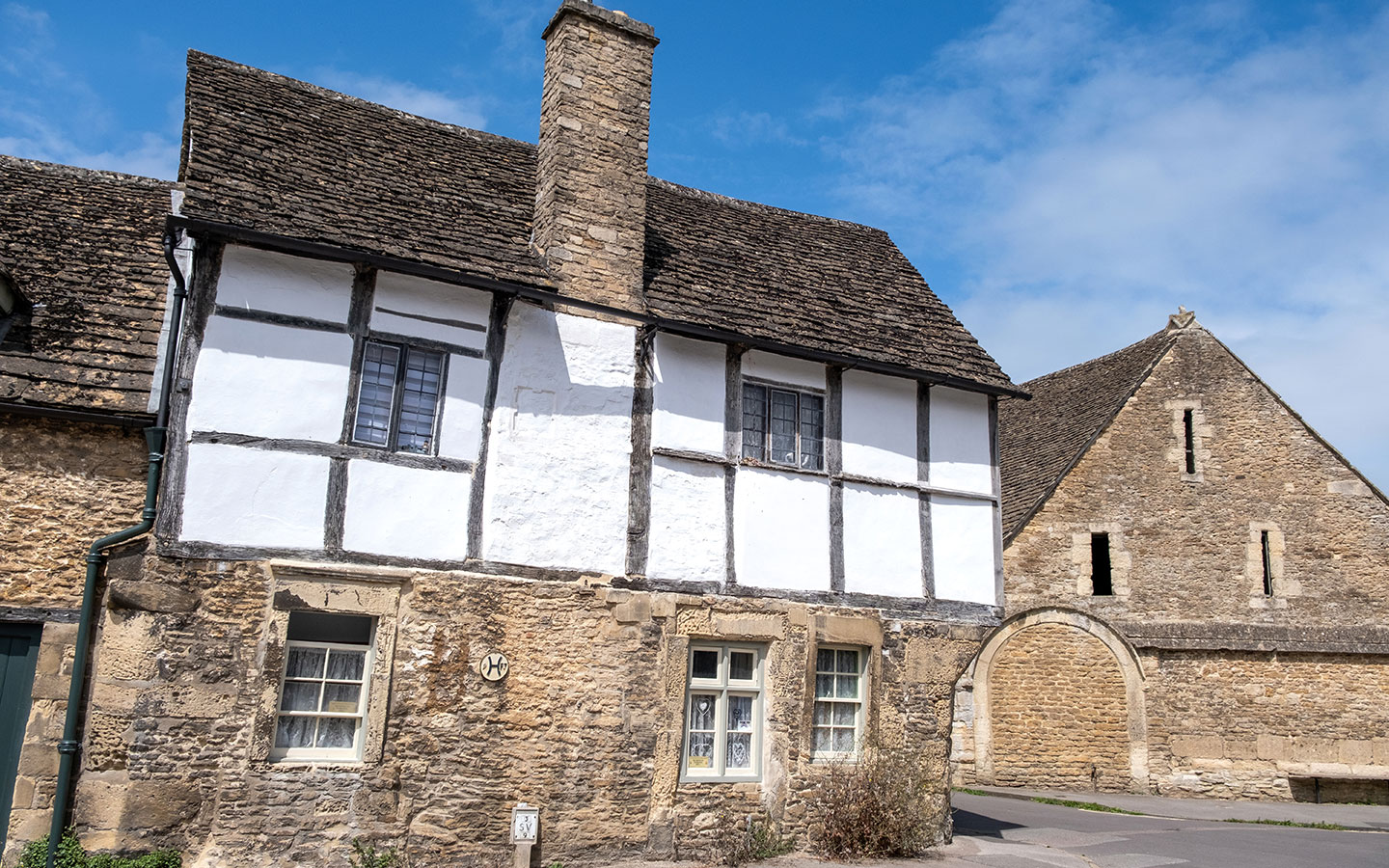
Close to the entrance of the abbey is a 14th-century tithe barn which would have once been used to store grain (free entry). When the nuns at Lacock Abbey owned the land in the village, local residents had to pay them rent. But rather than using money, they paid with crops or produce.
The tithe barn was later used as a market hall, and now holds occasional events. Look out for the small dome-roofed building next door to the barn too. This was added on in the 18th century as a lock up where drunk and disorderly locals were sent to sober up overnight.

Shop the honesty boxes
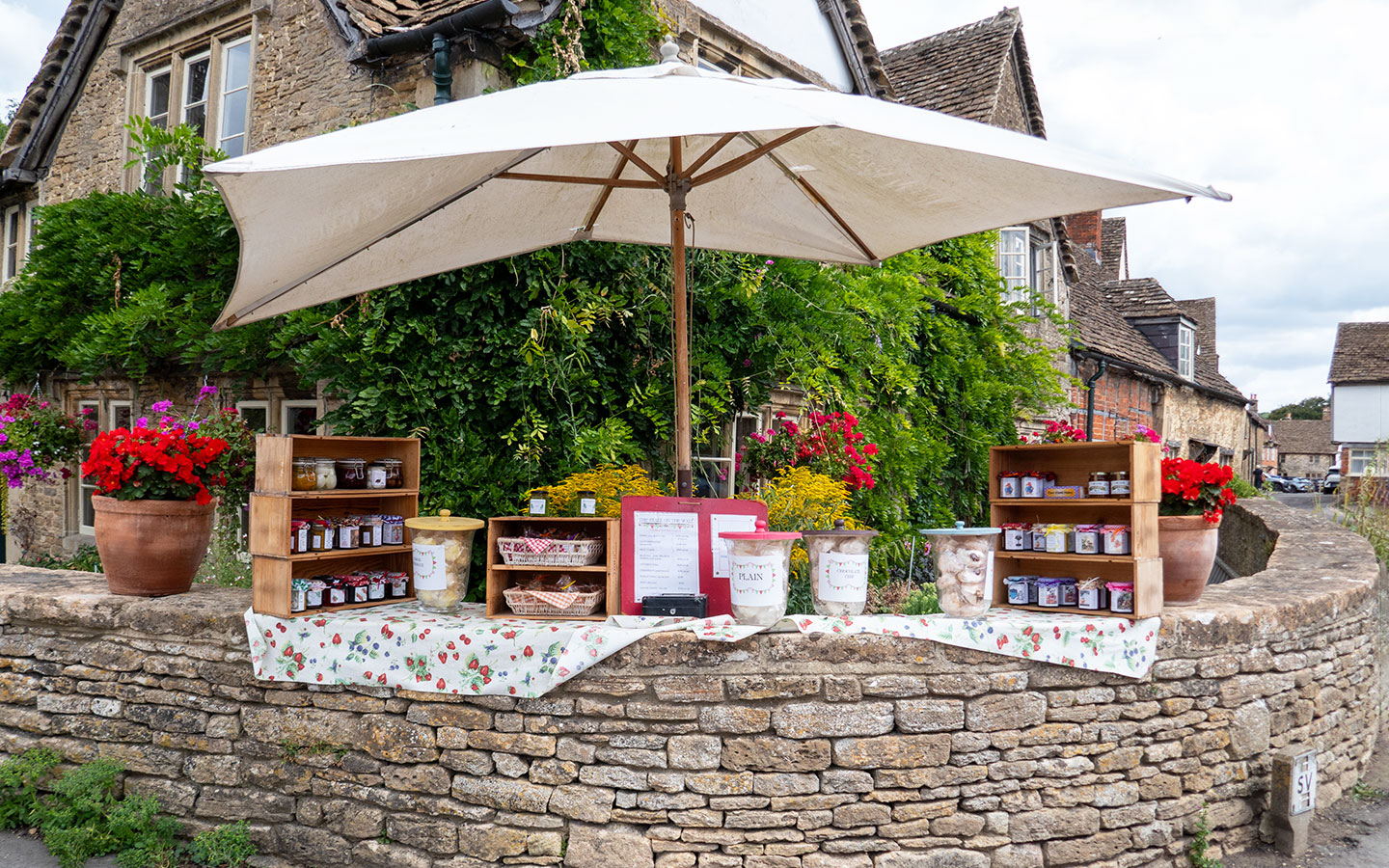
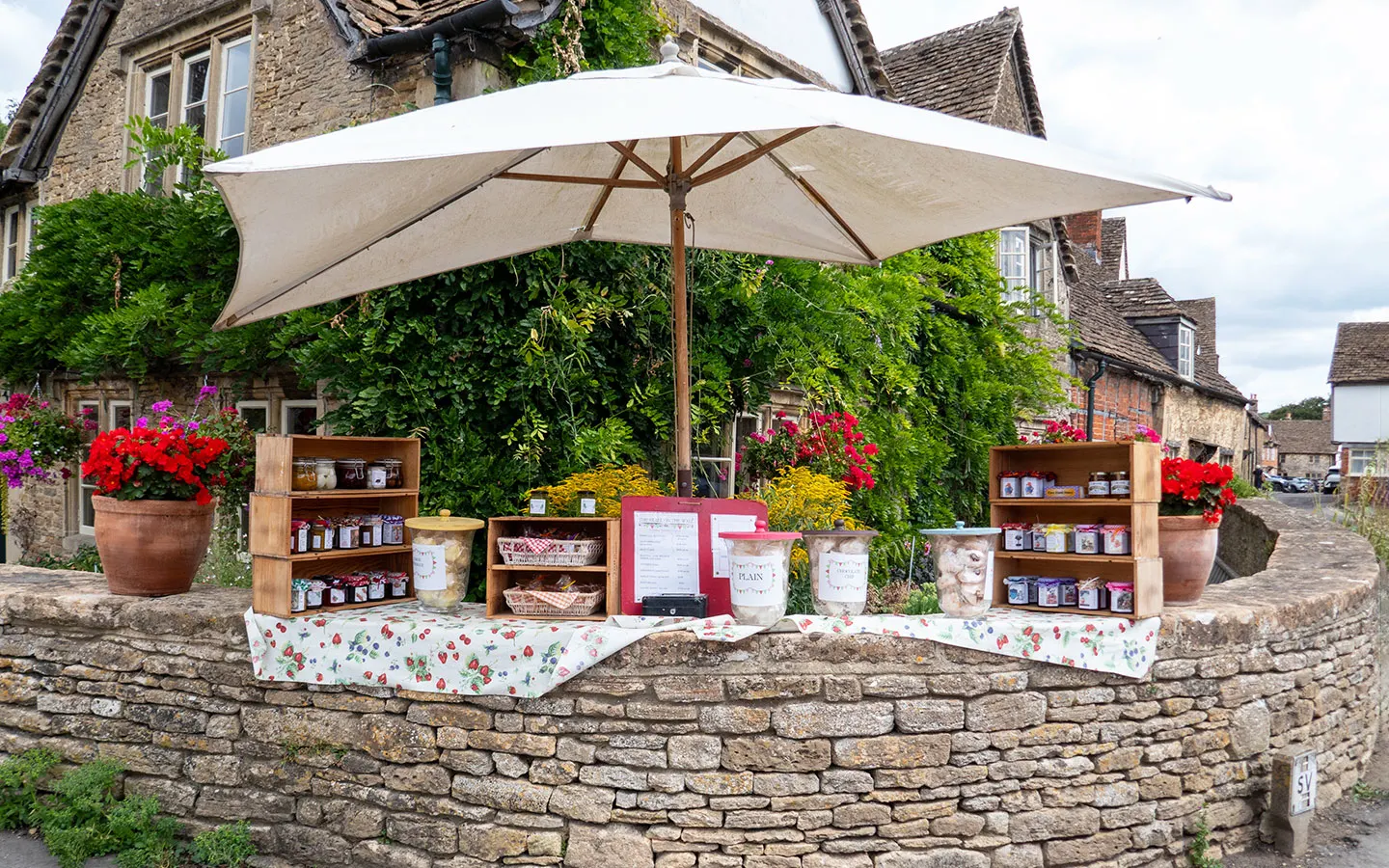
One of Lacock’s most charming traditions is its honesty boxes. These are unmanned shops where goods are left on doorsteps and you put the money though the letterbox. They traditionally sold homegrown fruit, vegetables, flowers and eggs. But now you’ll find all sorts of things on sale, including soaps, jams and lucky horseshoes (plus a few Harry Potter souvenirs).
Make sure to bring some cash with you as there are no ATMS in Lacock. Though you can withdraw cash at the post office when it’s open – and at least one enterprising local takes PayPal.
Walks from Lacock
The National Trust have several short, easy walks around Lacock. The Lacock Village Walk (1.3 miles) is a circuit around the village, the Pleasure Garden Walk (1 miles) takes you along the River Avon with views of the abbey, or the Lovers Walk (1.25 miles) passes the church and ford. The ford is a tranquil spot to escape the crowds, with a bench where you can sit by the water.
There’s also a longer 1.8-mile loop from Lacock via the village of Reybridge. Or a 5-mile circuit to Bowden Hill and along a stretch of the old Wilts & Berks Canal. But note both are currently inaccessible due to water works at Reybridge, which are due to be finished by September 2025.


Things to do near Lacock
The historic market town of Corsham is only 3.5 miles from Lacock, where you’ll find stately home Corsham Court. You can also easily combine Lacock with a visit to Castle Combe (9 miles), with its scenic bridge over the Bybrook, medieval Market Cross and motor-racing circuit.
There are also a couple of other National Trust properties to the south of Lacock – The Courts Garden (6 miles) and Great Chalfield Manor (7 miles). Or head west towards Bath (13 miles) for Bath Abbey, the Roman Baths, Thermae Bath Spa and a great selection of museums.
Places to eat in Lacock
Cafés and delis
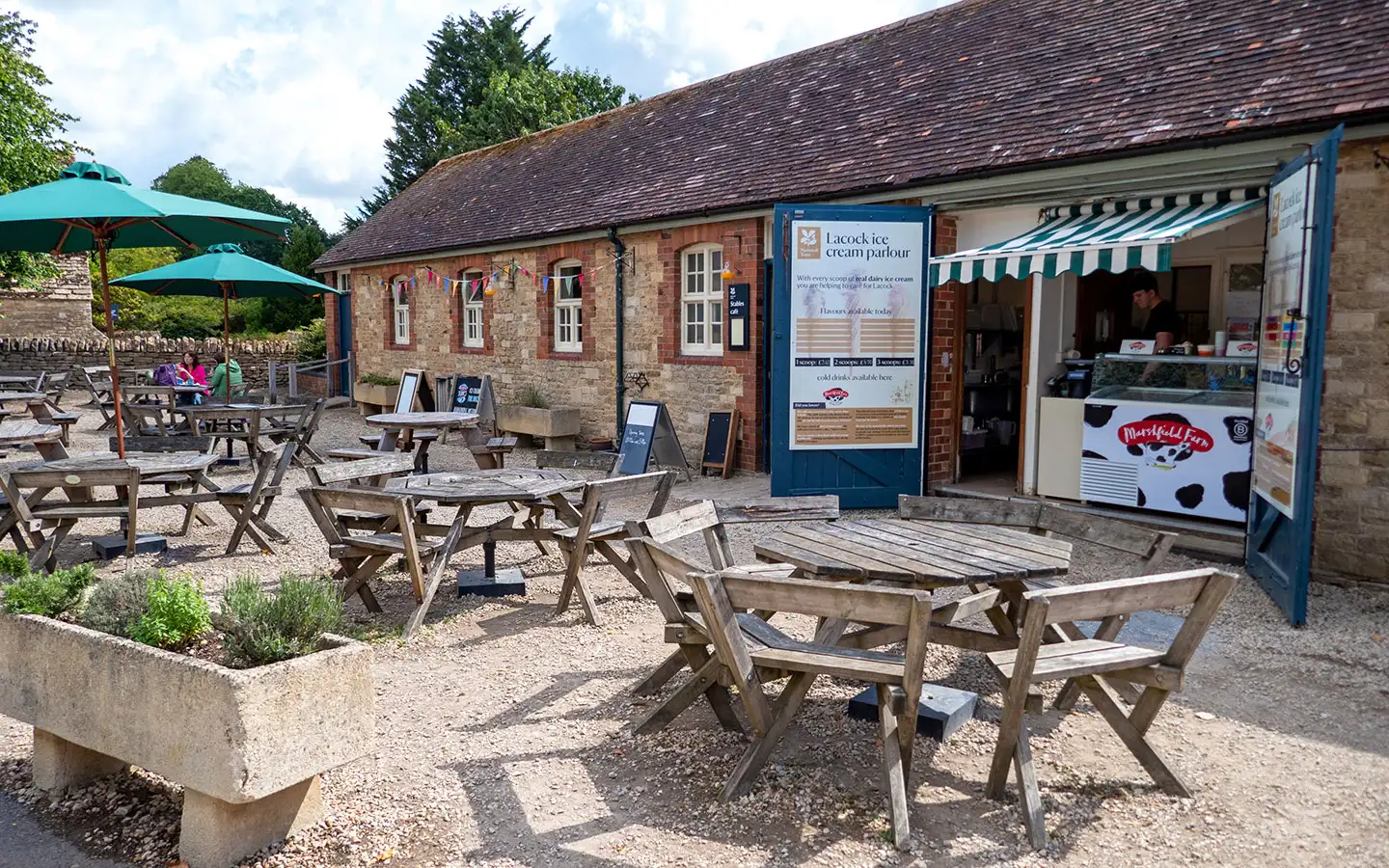
The National Trust has two cafés in Lacock – the Courtyard Tea Room inside the abbey grounds (so you need a ticket to visit) and the Stables Café outside the entrance. Both serve hot and cold drinks, snacks, cakes and scones, with indoor and outdoor seating. The Stables Café also has an ice cream hatch where you can pick up a scoop of local Marshfield Farm ice cream.

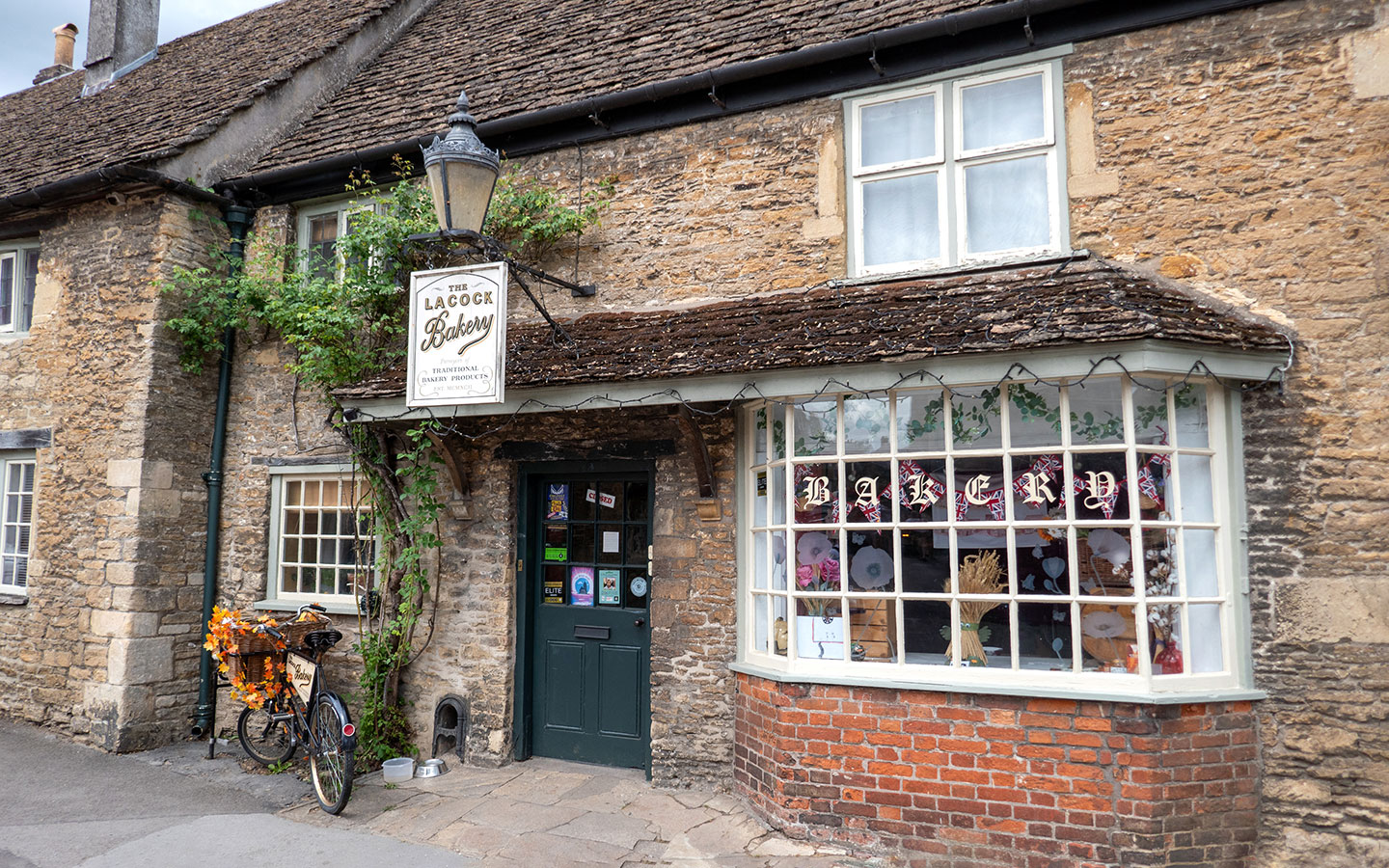
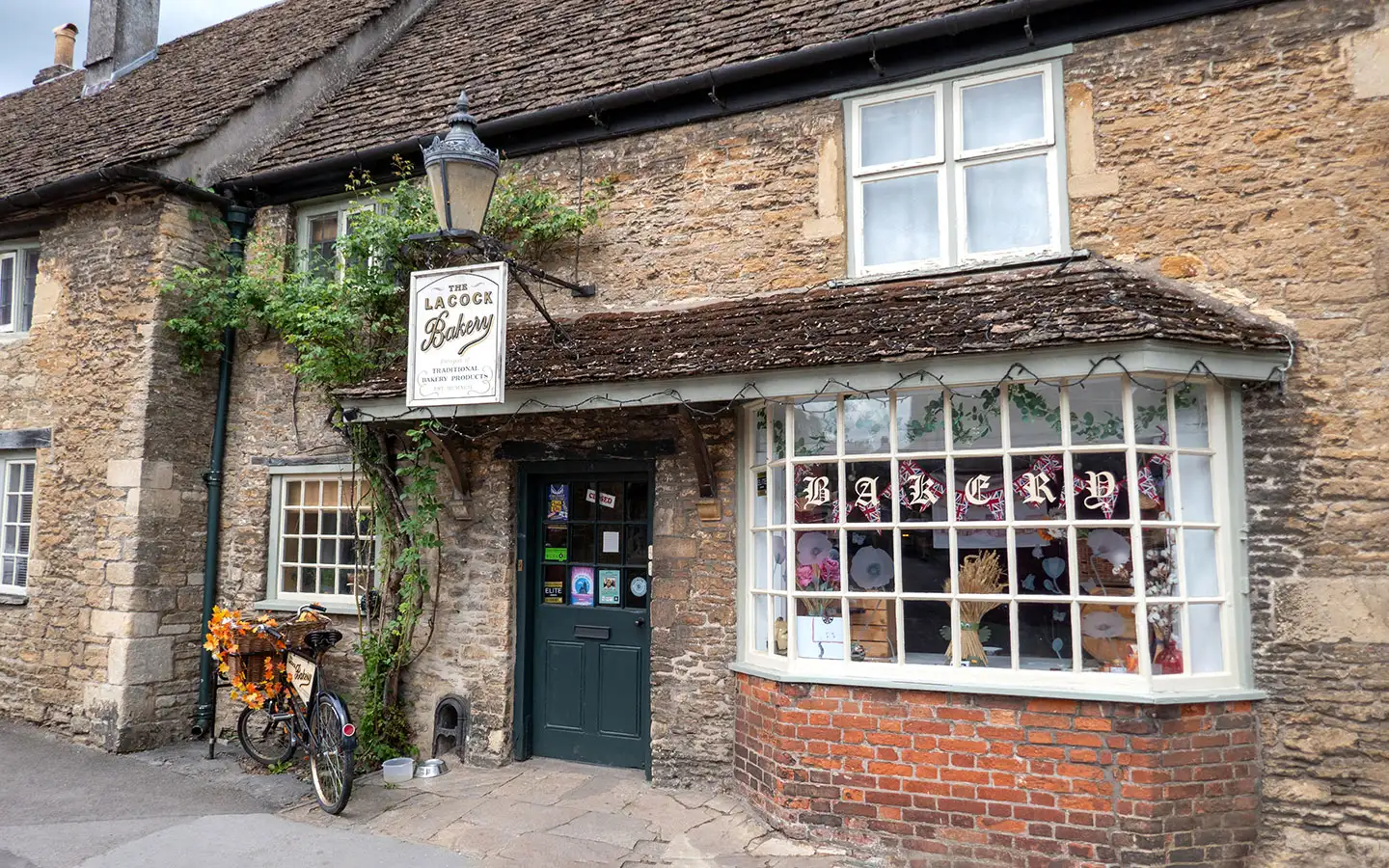
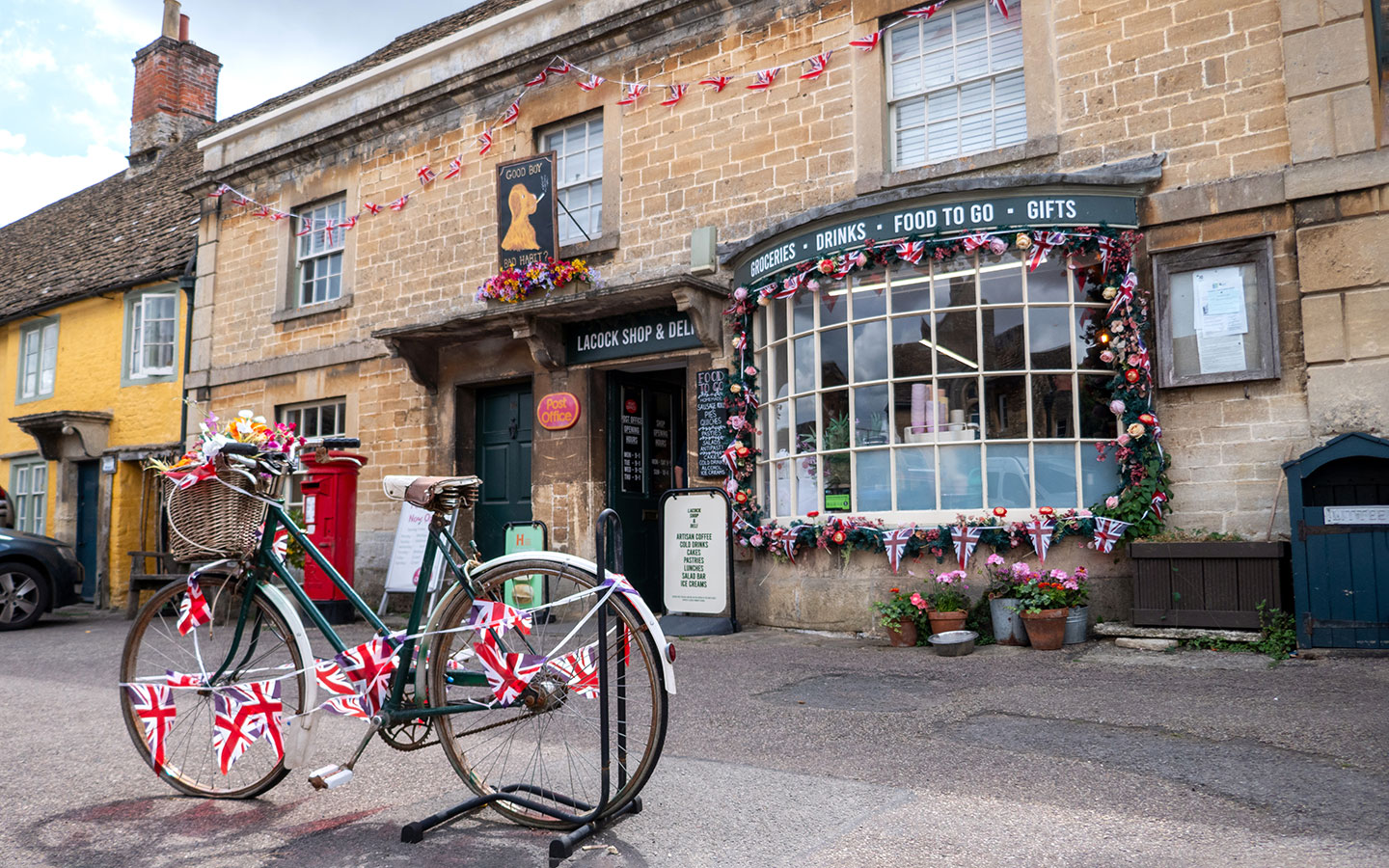
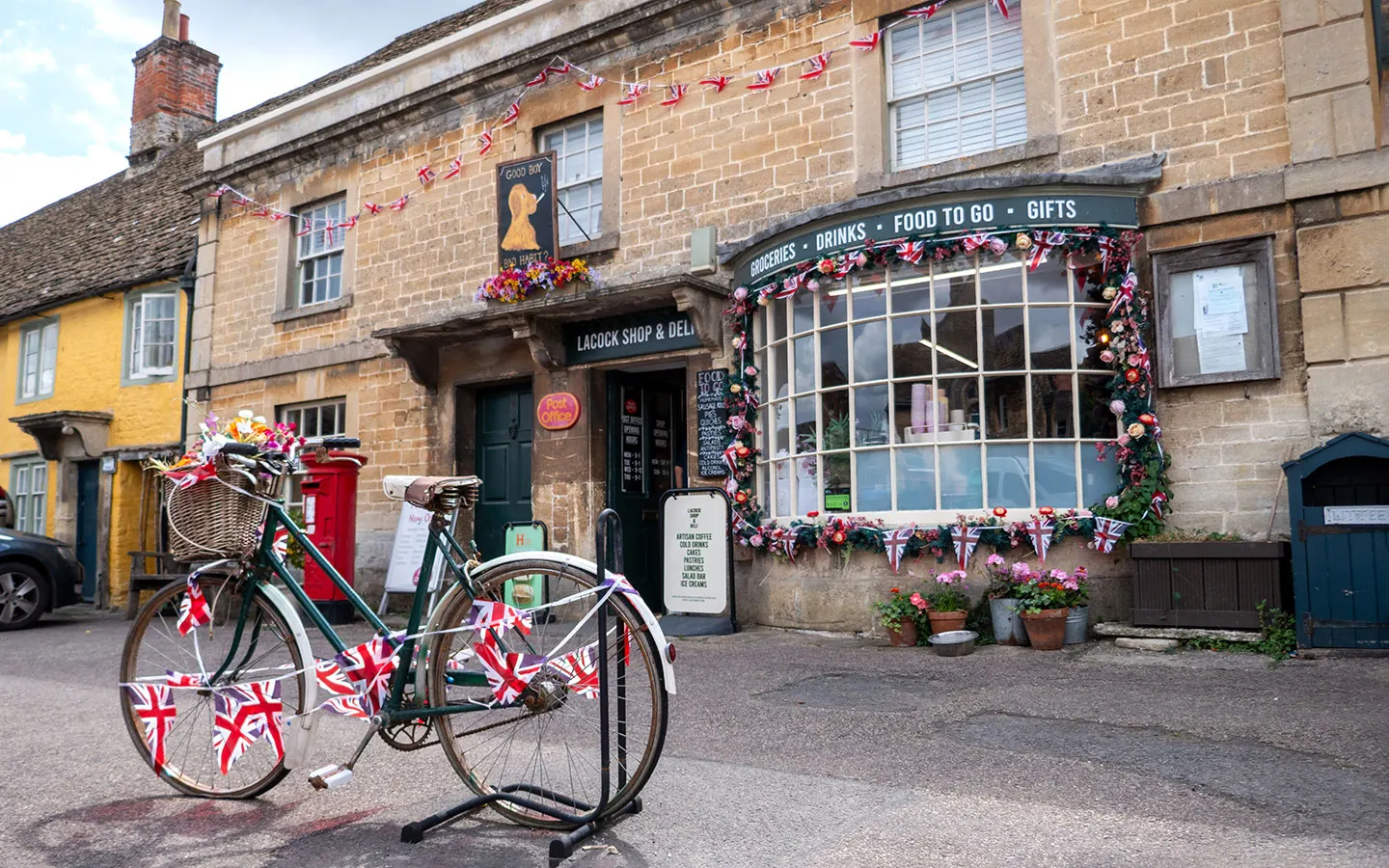
Lacock Bakery is one of the prettiest and most photographed buildings in town, with a vintage bike parked out front. This traditional bakery sells fresh bread, cakes and pastries. If you want to try some local specialities, look out for their Lacock Lardies (sticky fruit buns) and sugar mice.
You can also pick up local produce from the Lacock Village Shop & Deli. It’s perfect for a picnic, with a selection of homemade salads, quiches, pies, scotch eggs and sausage rolls on offer.
Restaurants and pubs
The Sign of the Angel is a picturesque, timber-fronted 15th-century coaching inn with a two AA Rosette restaurant. They use local, seasonal ingredients in upscale dishes like herb-crusted rump of lamb or heirloom tomato and artichoke tart. It’s also a good place for Sunday lunch or afternoon tea – served by the fire in winter or in the garden with the stream trickling by in summer.
The George Inn dates from 1361 and has plenty of historic features. Most unusual is the wheel in the bar, which was originally used to turn a spit to roast meat, powered by a special breed of dog called a Turnspit. The pub is still dog friendly – though they don’t get put to work these days!

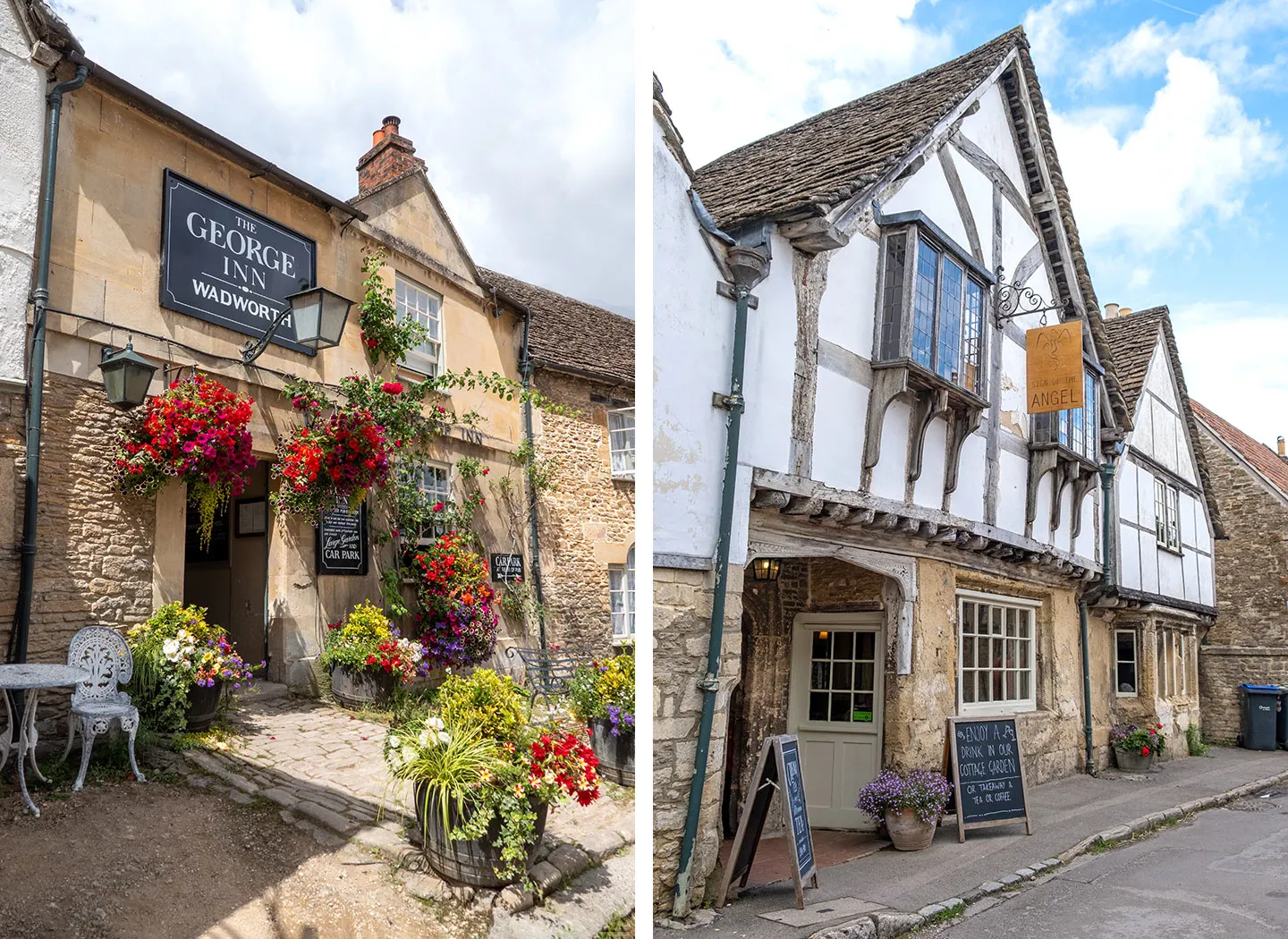
The inn is run by Wiltshire brewers Wadworth, who are based in Devizes. As well as their beers, they serve tasty pub food, with dishes like ale-battered haddock and lemon and herb roast chicken alongside a decent range of veggie and vegan options like miso and maple glazed aubergine.
The Red Lion is another Wadworth pub, this time in a 19th-century Georgian building, originally built for John Ivory Talbot from Lacock Abbey. Inside there are flagstone floors, sash windows and an open fireplace, with a heated, canopied garden outside. The menu features modern pub dishes, including beef and ale pie, honey-glazed ham and eggs, and crispy jackfruit burgers.


Where to stay in Lacock
The Sign of the Angel* has five stylish en-suite bedrooms with original beams and historic curios. They’re split between snug, standard and more spacious superior rooms and all come with a bath and shower and a welcome tray of homemade treats. All rooms (as well as the pub and restaurant) are dog-friendly, and there’s a wood-panelled guest sitting room and gardens.
The Red Lion* has five double bedrooms, decorated in traditional country style and each with an en-suite bathroom. Breakfast is included in the room rate, as well as complimentary coffee and tea. Rooms are dog-friendly, and there’s free parking at the back of the pub.


The Rectory* is an adults-only bed and breakfast in a grand Victorian building surrounded by private grounds on the edge of Lacock. There are five spacious en-suite bedrooms, two of which have four-poster beds. A full English breakfast is included, which is cooked to order. They also have two self-catering holiday cottages* in the converted stables, each with two bedrooms.
Or if you’re visiting with a group, Reybridge House* is a beautiful eight-bedroom property which can sleep up to 18 people. There’s plenty of character from exposed beams, wooden flooring and restored fireplaces – as well as a cosy wood-burner, hot tub and large private garden.
How to get to Lacock
Lacock by car
Lacock is around 4.5 miles south of Chippenham via the A350. You can easily get there from Bristol and Bath to the west, or London and Swindon to the east, using the M4 motorway. Take the exit at Junction 17 and then follow the A350 south for eight miles until you reach Lacock.
There’s limited free parking next to the Stables Café and public toilets just off the High Street in Lacock (SN15 2LG). Or a large National Trust car park on the edge of the village (SN15 2RQ). This is free for National Trust members, but charges £5 a day for non-members.
Lacock by public transport
The nearest train stations are in Chippenham and Melksham. Both are connected to Lacock by the Faresaver X34 bus, which runs every day. It takes 13 minutes from Chippenham bus station and 11 minutes from Melksham Market Place, stopping outside The George Inn in Lacock.
* This site contains affiliate links, where I get a small commission from purchases at no extra cost to you.
Save for later

You might also like