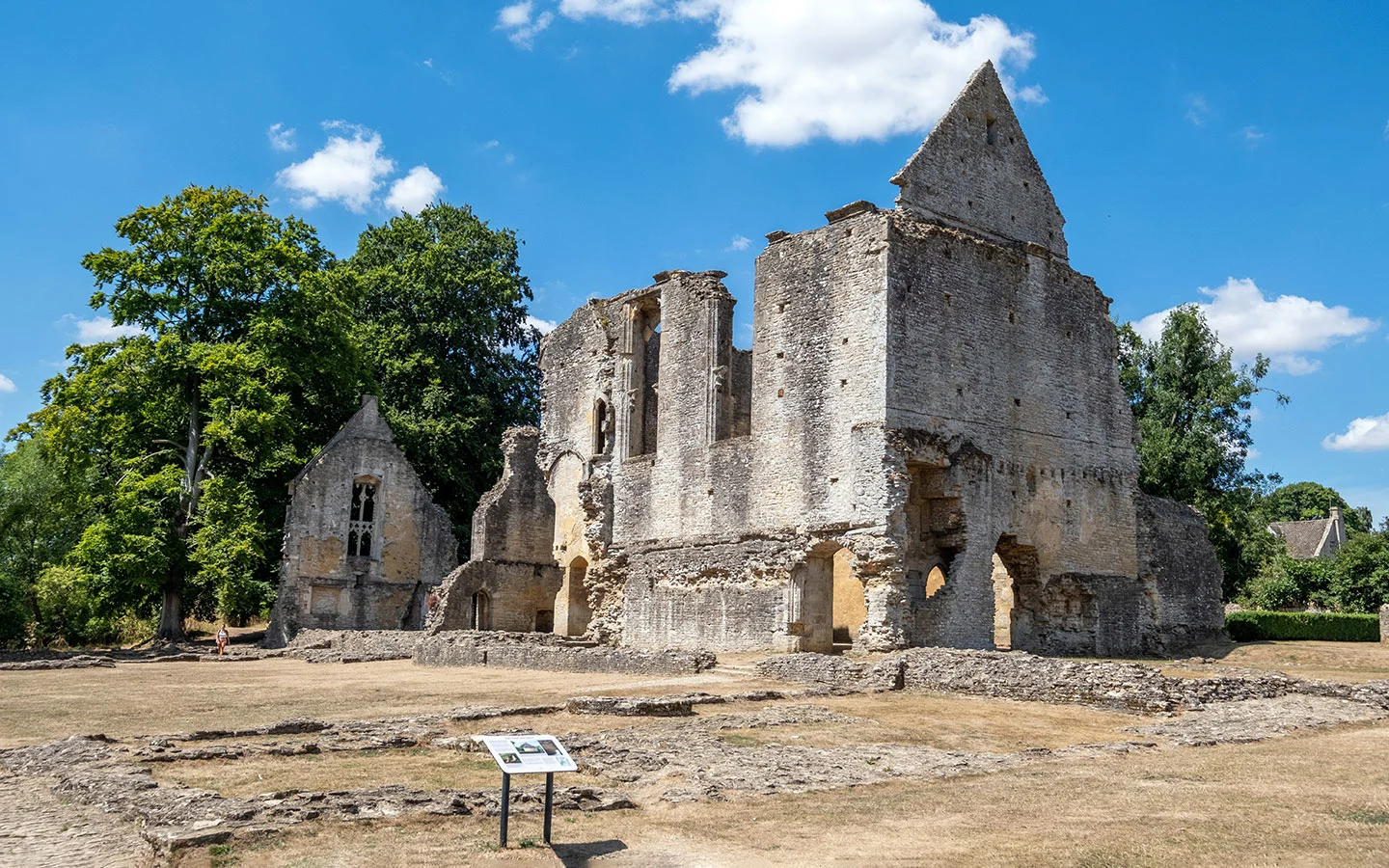
Just a few miles east of Burford, the neighbouring villages of Asthall and Swinbrook are surrounded by the peaceful countryside of the Windrush Valley. They’re one of the lesser-known corners of the Oxfordshire Cotswolds, but have a trio of historic churches, scenic riverside walks, country pubs and fascinating links to the famous Mitford family to discover. Find out what to do as well as the best places to eat, drink and stay in Asthall and Swinbrook with out local expert’s tips.
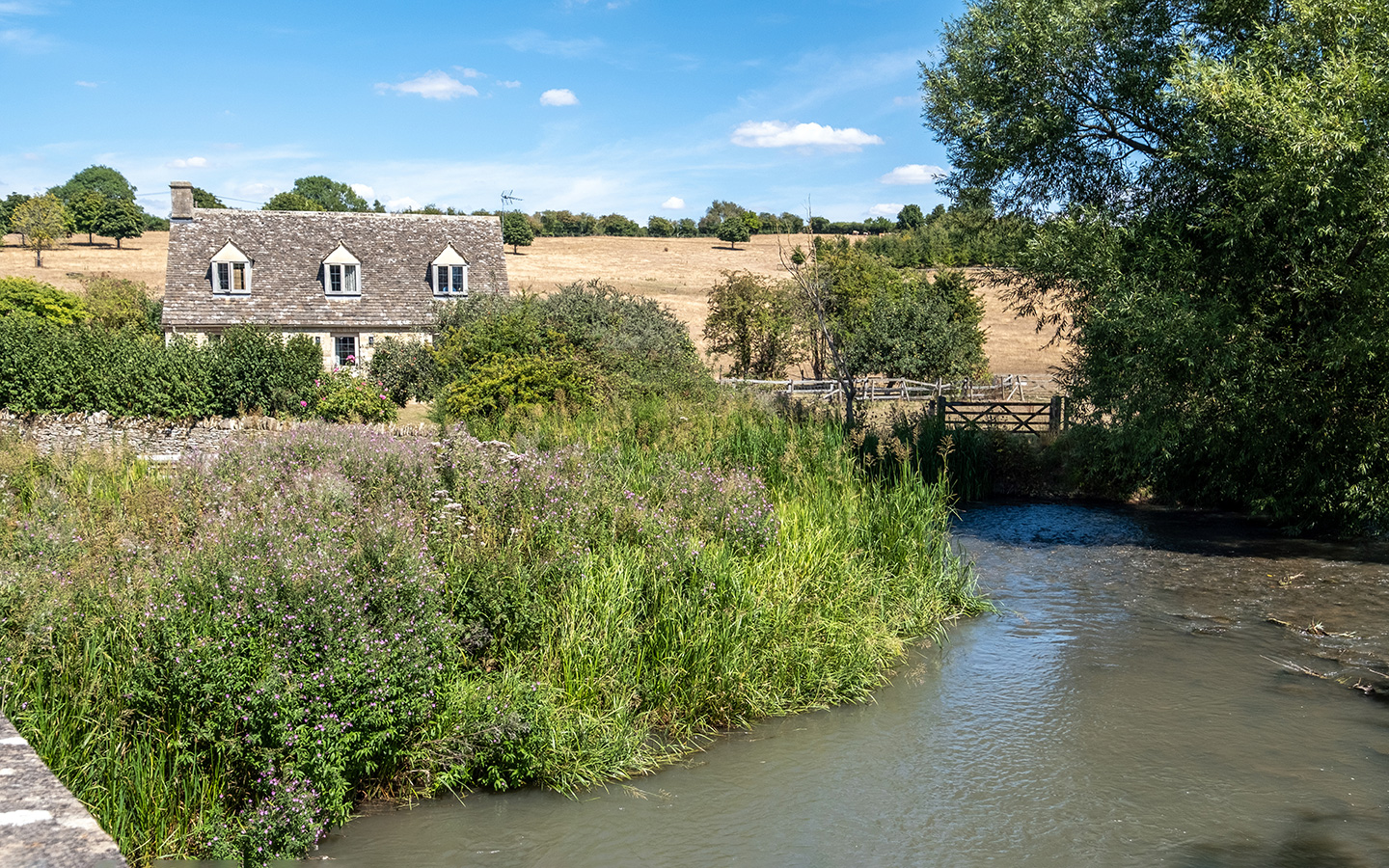
Asthall and Swinbrook’s history
Swinbrook and Asthall grew up close to Akeman Street, an ancient Roman road which connected Cirencester and St Albans. Both villages have Anglo-Saxon origins. Swinbrook’s name means ‘pig brook’, and came from the pigs which were herded around the nearby Wychwood Forest, while Asthall comes from the Old English words east halh, meaning ‘east nook of land’.
The area’s oldest surviving landmark is Asthall Barrow, a rare seventh-century Anglo-Saxon burial mound. It’s not known who was buried there, but discoveries of pottery, a silver bowl and fragments of a drinking horn suggest it was the grave of someone with high status.
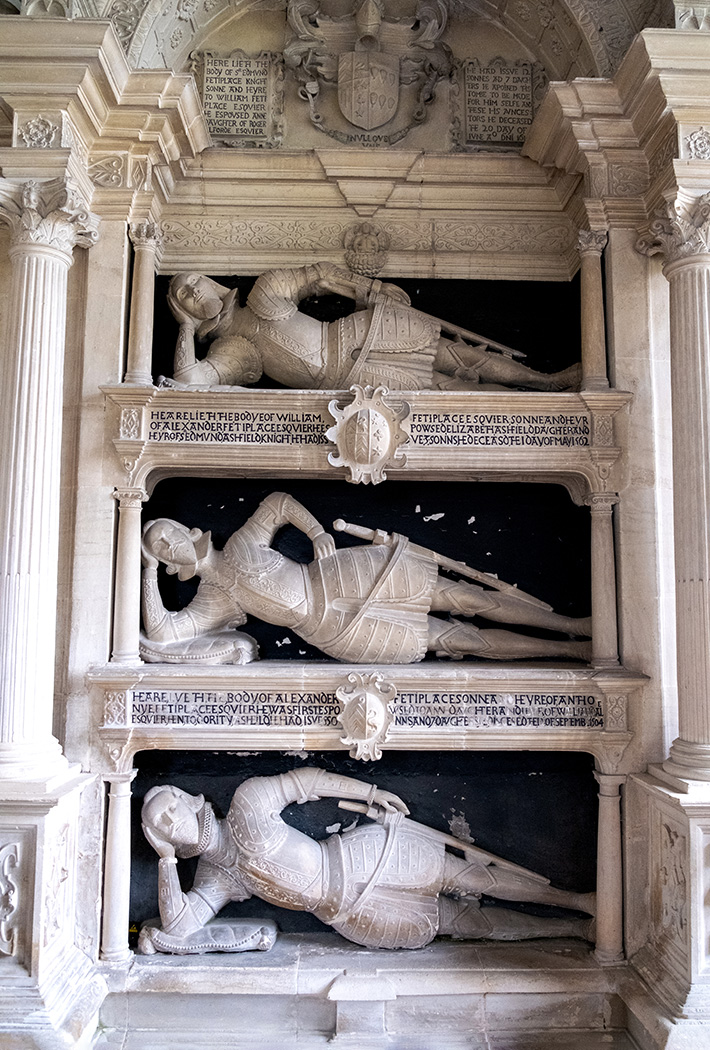
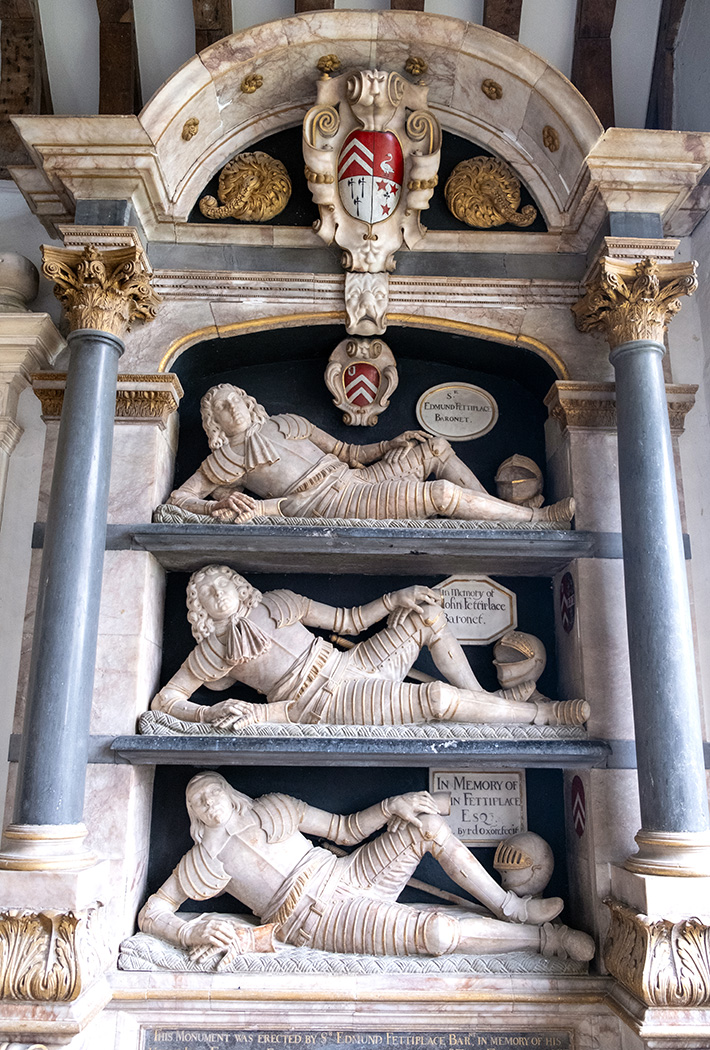
From the Tudor period, the villages became the seat of the Fettiplace family. They were one of Oxfordshire’s wealthiest landed families and owned much of the land around the Windrush Valley. Today they’re commemorated by impressive tombs in St Mary’s Church, Swinbrook.
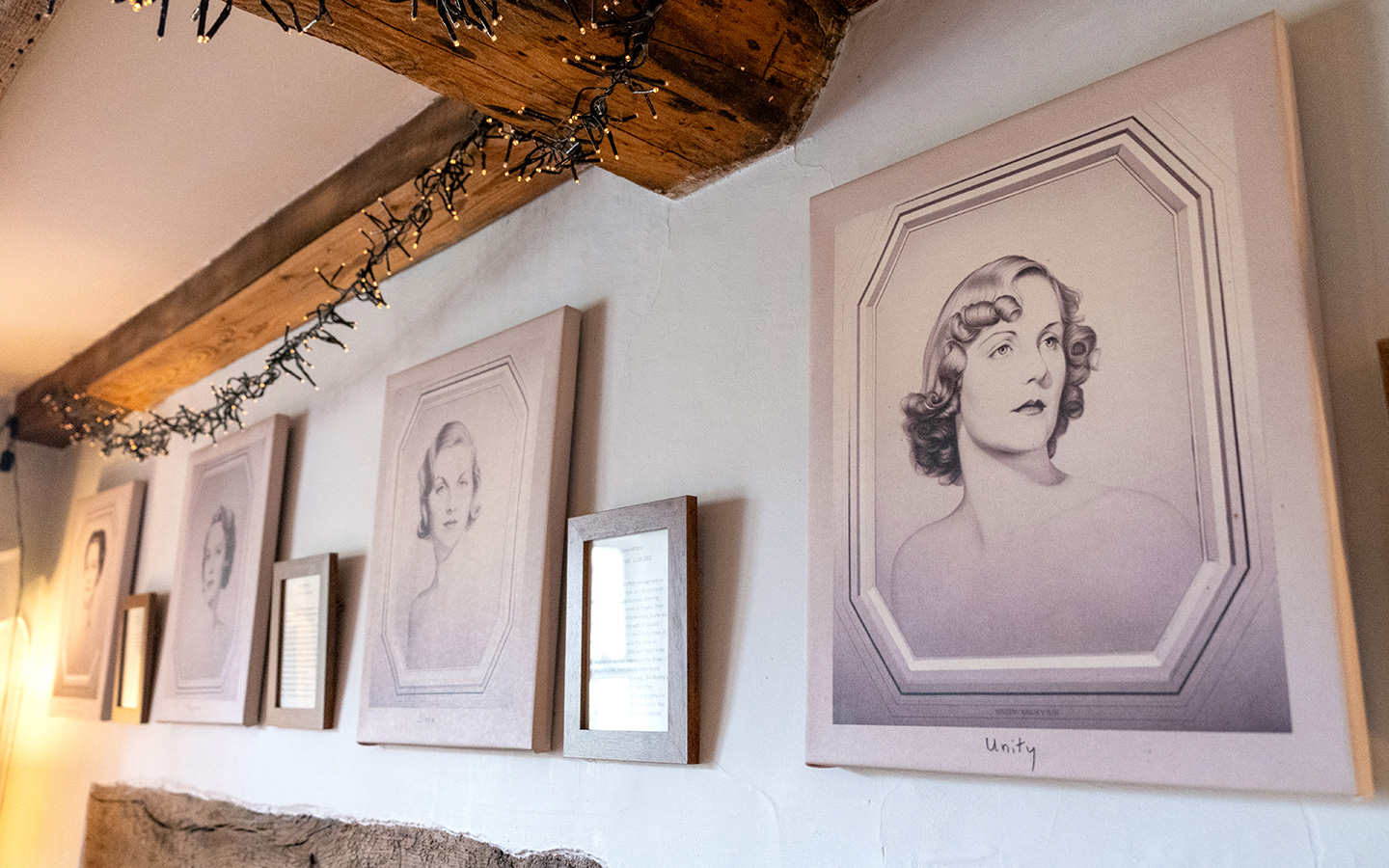
In the early 20th century, Asthall and Swinbrook became closely associated with the Mitford family. Bertram Freeman-Mitford, 1st Baron Redesdale, created nearby Batsford Arboretum, and his son David moved into Asthall Manor in 1919. It was the childhood home of his six daughters, the Mitford sisters, whose extraordinary lives inspired biographies, novels and documentaries. The family later moved to Swinbrook House, which Redesdale had built on the site of a derelict farm.
Map of Asthall and Swinbrook
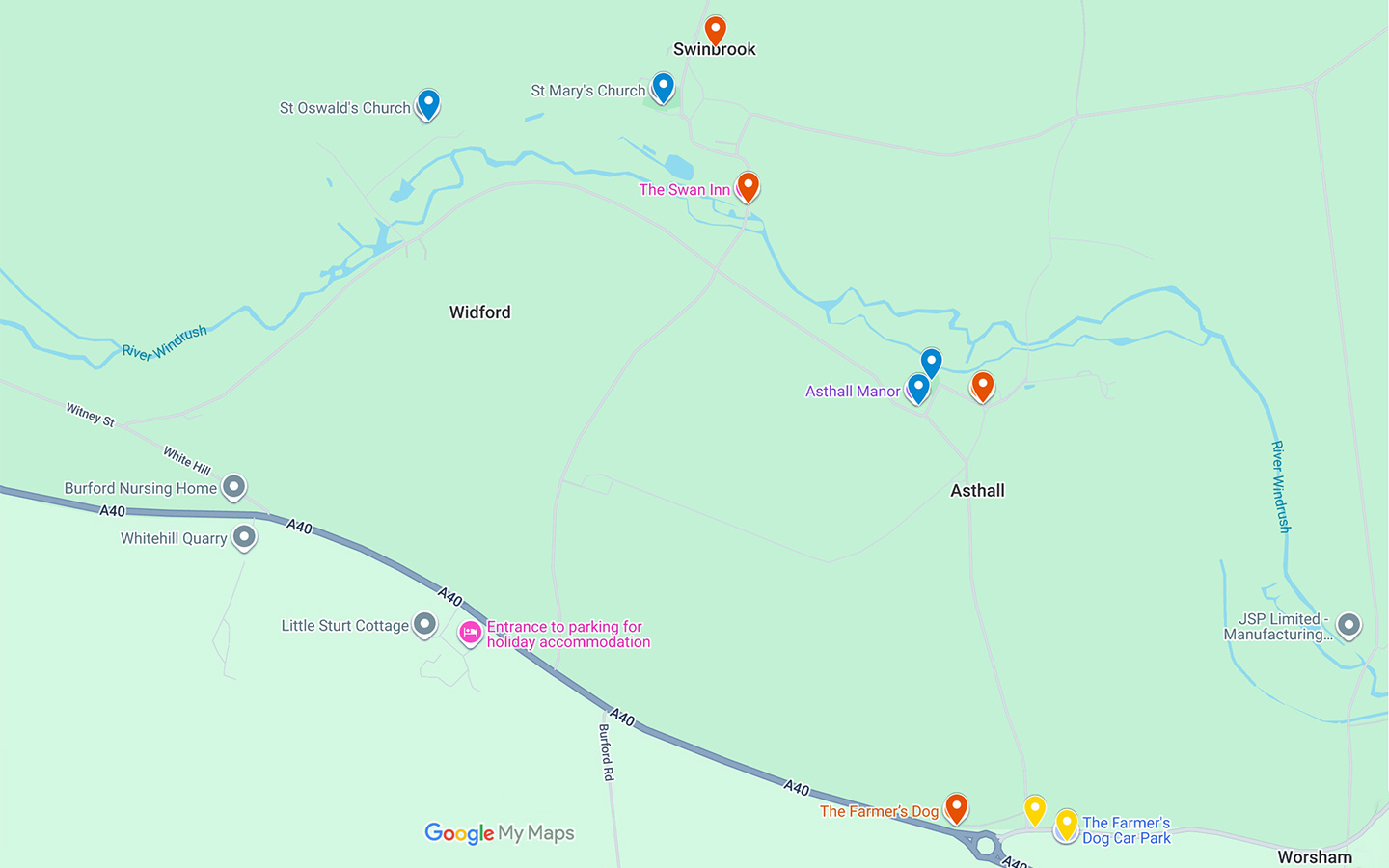
Things to do in Asthall and Swinbrook
St Mary’s Church, Swinbrook
Swinbrook’s St Mary’s Church dates from around 1200. The oldest section is the north aisle, with the south aisle added a century later. And much later still, the unusual open-sided bell tower was constructed in just six weeks in 1822 after the original tower became unsafe.
Inside the church you can see two spectacular monuments to the Fettiplace family. They both feature three generations of the family carved in stone, lying one above another. But the styles are very different, with a restrained Jacobean design from 1613 and an lavish Baroque version from 1686. Look out for the beautifully carved medieval misericords beneath the choir stalls too.
The churchyard is also the resting place of four of the Mitford sisters. Nancy, Unity and Diana’s graves are close to the tower, and Pamela and their parents are buried nearby. There’s also a memorial plaque to their brother Tom in the church, who was killed in Burma during WWII.

Asthall Manor
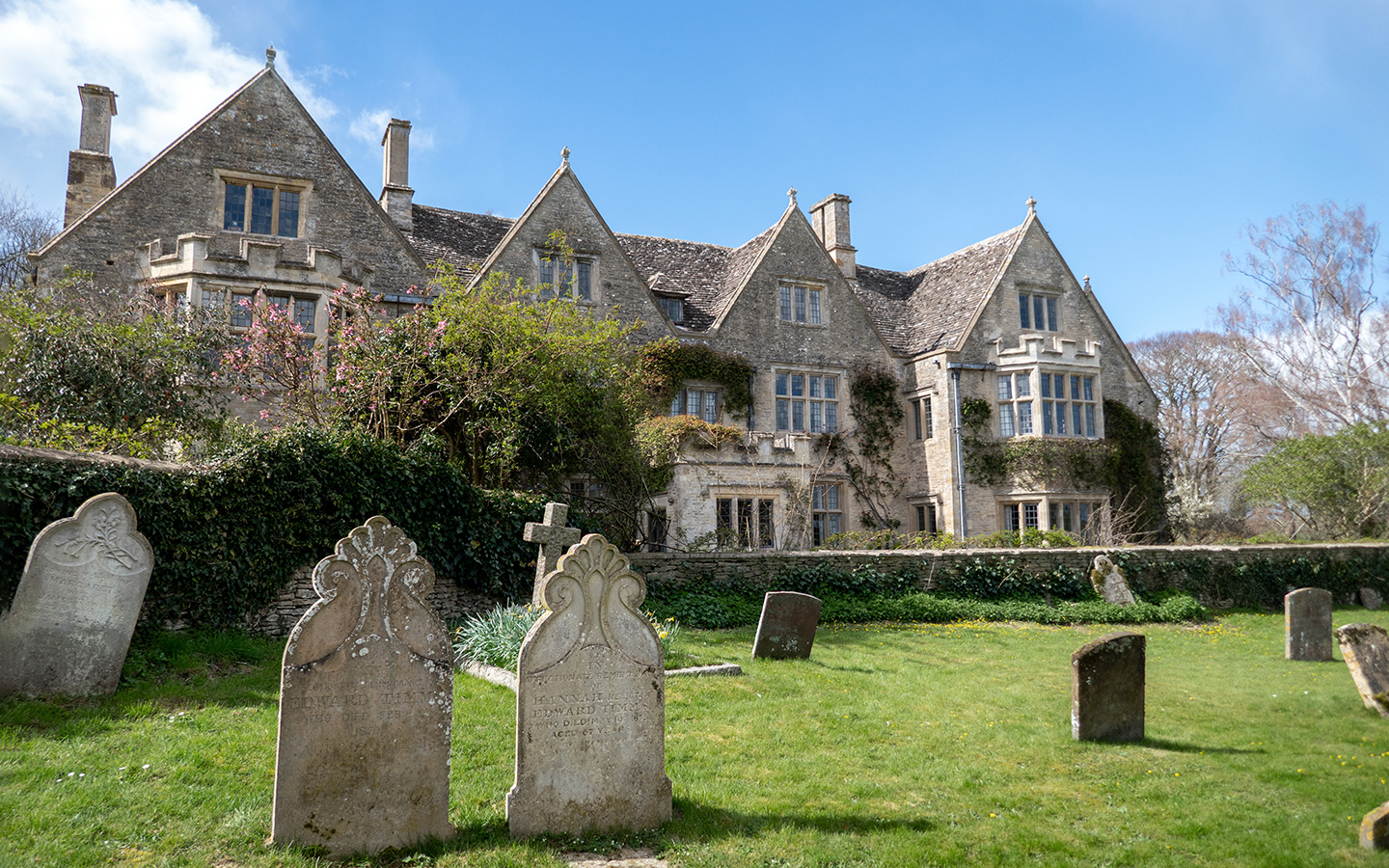
Jacobean Asthall Manor overlooks the churchyard in Asthall, built around 1620 on the site of a medieval building. Sir Edmund Fettiplace bought it in 1688 and it remained in his family for the next 130 years until it was sold to John Freeman-Mitford in 1810. After a stint as a convalescent home for WWI soldiers, David Freeman-Mitford inherited it in 1919 and moved his family in.
The house and its legendary parties were the inspiration for ‘Alconleigh’ in Nancy Mitford’s famous novel The Pursuit of Love. Youngest sisters Jessica and Deborah were born there and Diana had her appendix taken out on the spare bedroom table! Their father added a ballroom and converted the barn into a music room and library, before the family moved to Swinbrook in 1926.
Asthall Manor isn’t normally open to the public, but they host summer garden open days in May and June, when you can visit on Wednesdays, Fridays and Saturdays (pre-booking required). The gardens were designed by Julian and Isabel Bannerman, best known for their work at King Charles’ Highgrove House. There are also special events like outdoor theatre and yoga.
St Nicholas’ Church, Asthall
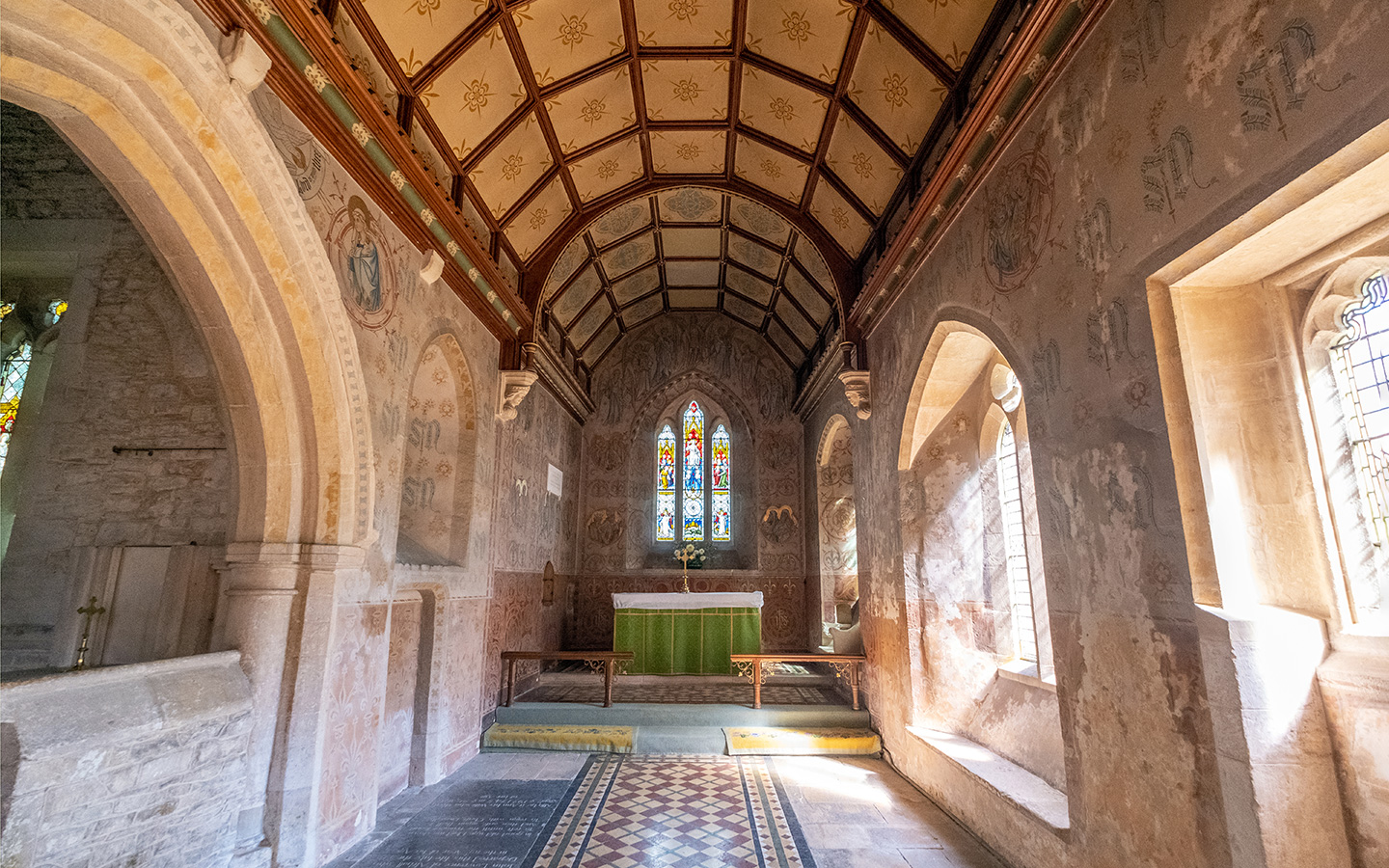
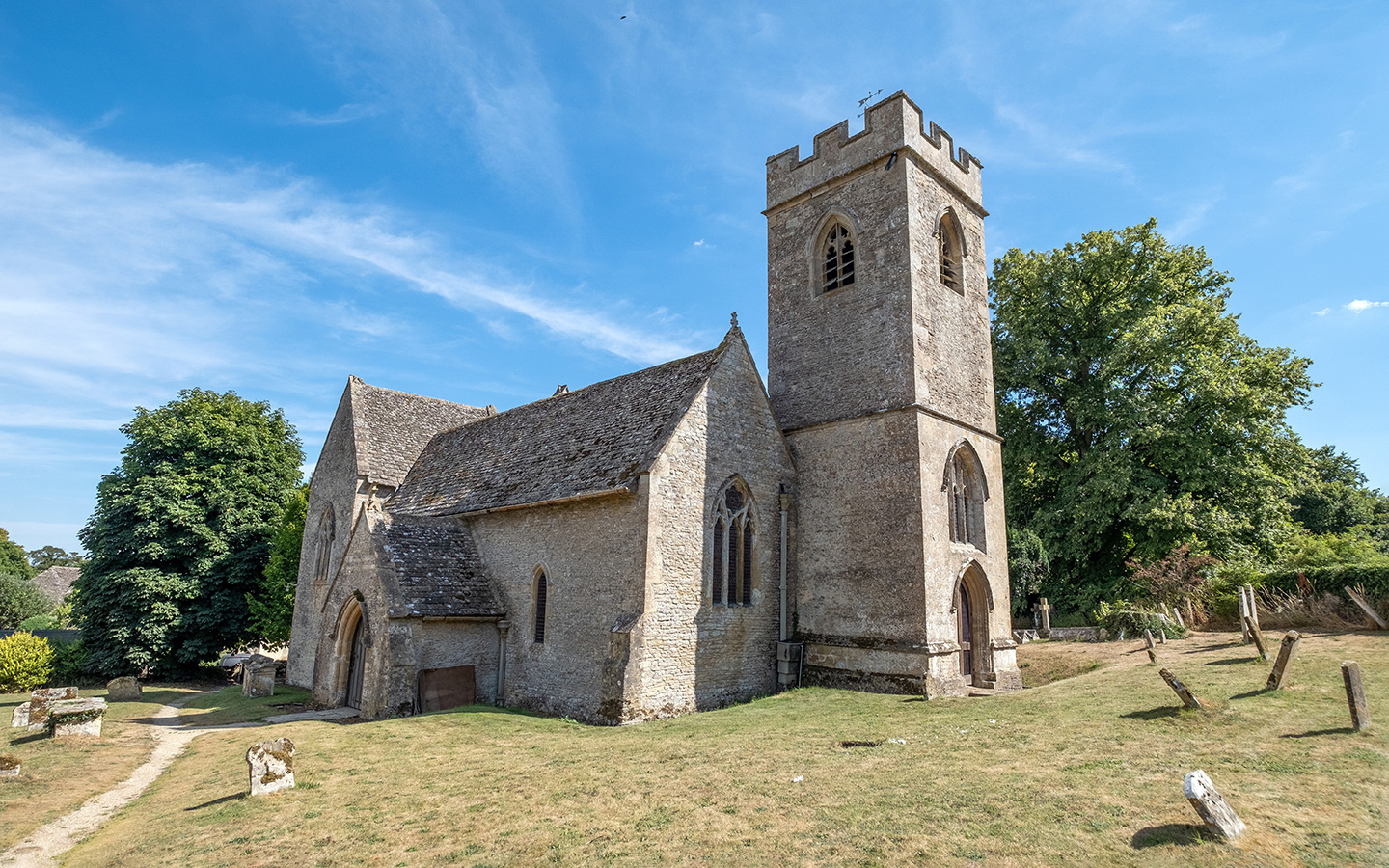
Next door to Asthall Manor, St Nicholas’ Church has Norman origins, but much of the present building was added in the 13th and 15th centuries. Inside, look out for the Norman tub font, 17th-century clock and the 14th-century chantry chapel built for Lady Joan Cornwall.
It includes fragments of original stained glass and a carved figure of her lying under an ornate Gothic canopy. The chancel is more colourful, with a panelled ceiling, intricate wall paintings and patterned floor tiles added during the Victorian restoration. And outside there are carved bale tombs from the village’s days as a centre for the wool trade and headstones from the 1600s.
The Farmer’s Dog
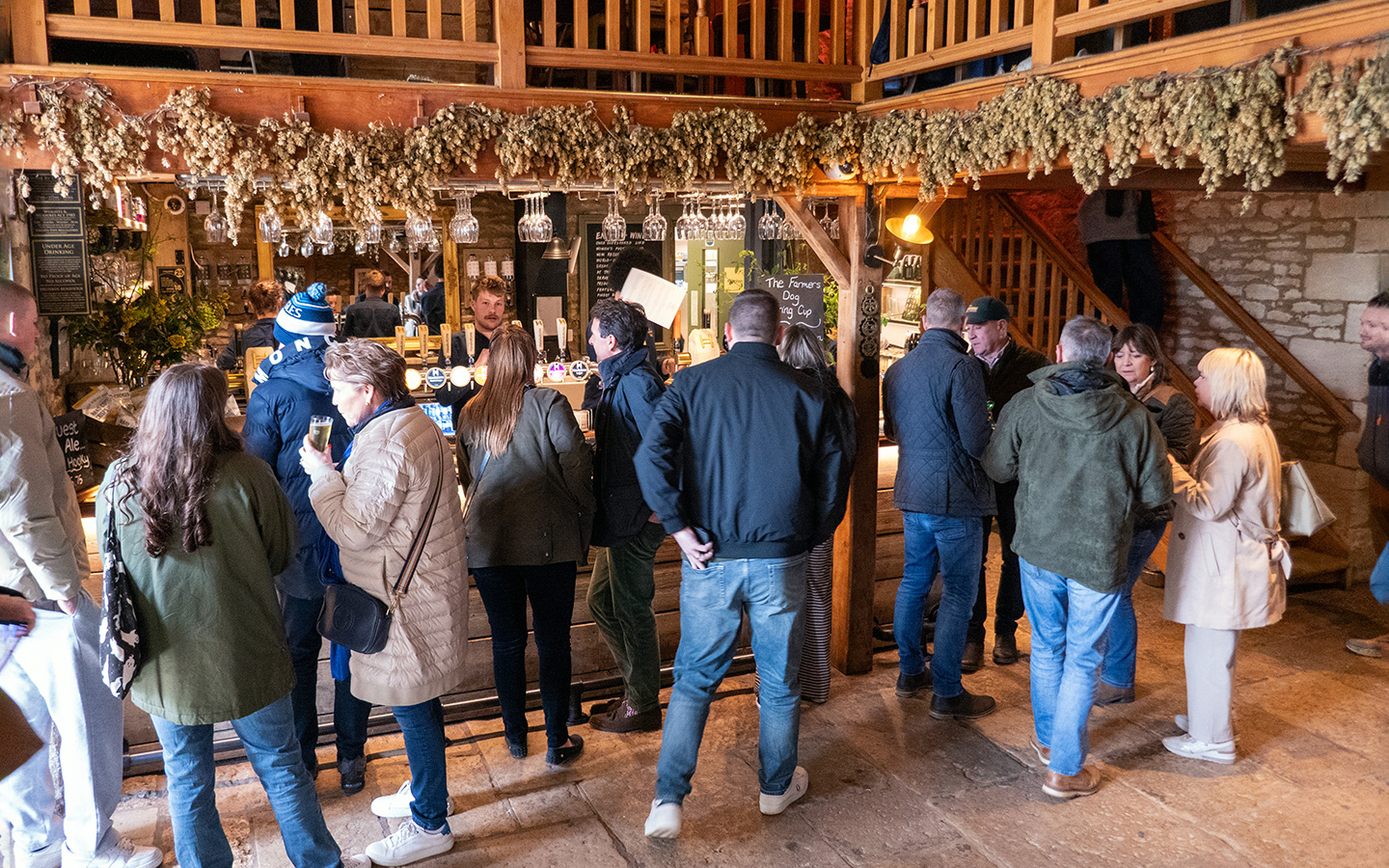
The Farmer’s Dog, just outside Asthall, is the latest addition to Jeremy Clarkson’s expanding Cotswolds empire, following Diddly Squat Farm Shop near Chipping Norton and Hawkstone Brewery in Bourton-on-the-Water. Located at Asthall Barrow on the A40, it’s worth a visit if you’re curious to see the latest chapter in the Clarkson’s Farm story – and don’t mind crowds.
The pub champions British farming, with a menu featuring ingredients sourced from mostly UK producers, alongside Hawkstone beers on tap. It’s much more than a pub though, with a whole menu of extras including a well-stocked gift shop selling branded merchandise, a butcher and bottle shop, outdoor bars with countryside views, and a food tent serving burgers and pizzas.
St Oswald’s Church, Widford
The third of the churches in the area is St Oswald’s in Widford, a 10-minute walk from Swinbrook. It’s one of the Cotswolds’ most atmospheric churches, standing on its own surrounded by fields. There was originally a substantial medieval village in Widford, but the church and manor house are all that’s left now, with grass replacing the former cottages and farm buildings.
St Oswald’s Church is built on the site of a Roman villa or bathhouse, and a mosaic uncovered in the chancel was relocated to the Corinium Museum in Cirencester. Inside the tiny church you can see remnants of 14th-century wall paintings and 18th-century wooden box pews.

Walks around Asthall and Swinbrook
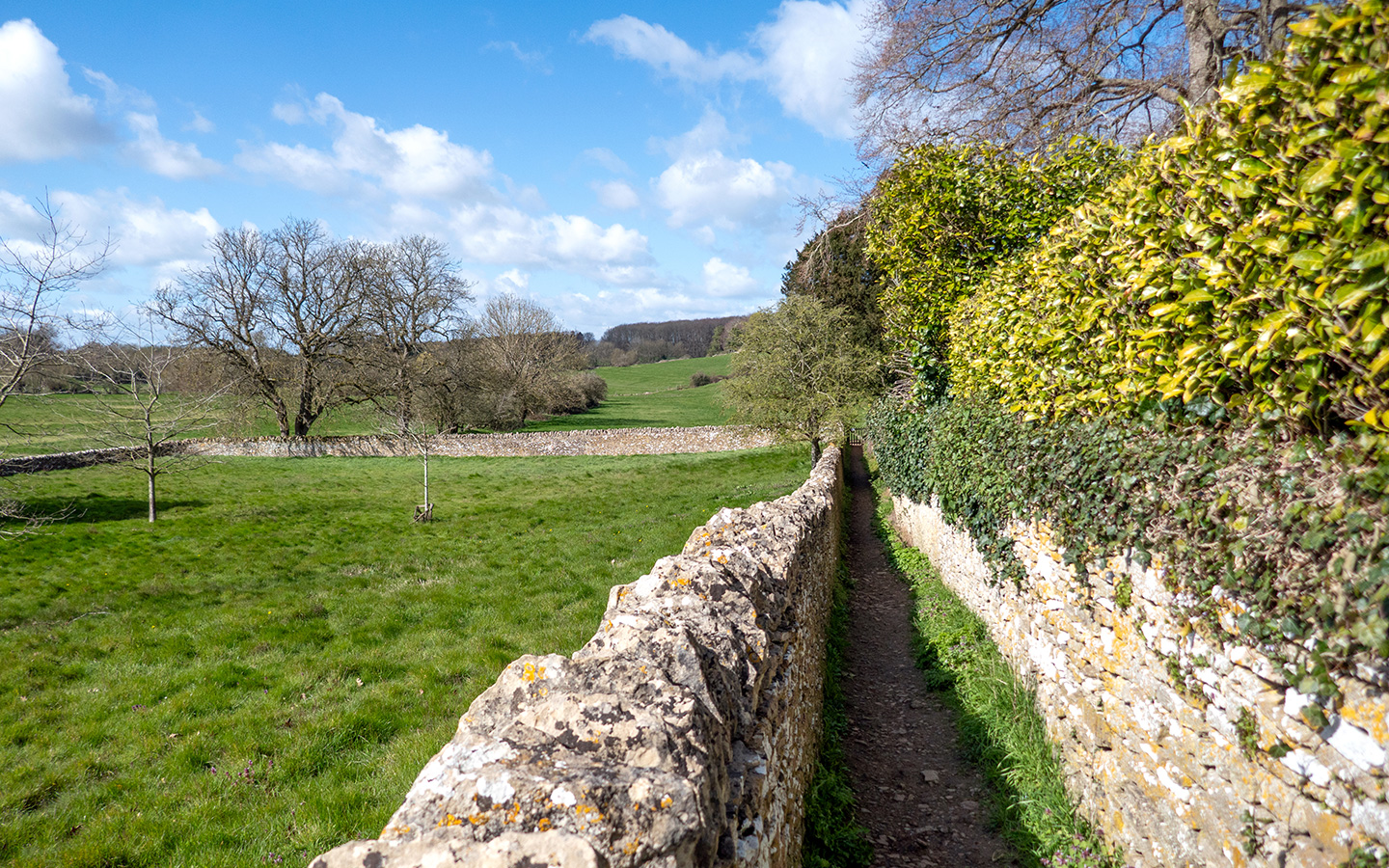
The villages are surrounded by footpaths which are a great way to explore the Windrush Valley, though waterside paths can be muddy or flood after heavy rain. A 5-mile circular route starts in Asthall and follows both banks of the Windrush as it loops through Swinbrook and Worsham.
You can also take a longer 6.2-mile circular walk along riverside paths, open fields and quiet country lanes, which visits both villages as well as Burford and Fulbrook. Or follow the Windrush to the east from Asthall to Minster Lovell to visit the riverside ruins of Minster Lovell Hall. It’s around three miles each way or you can catch a Stagecoach 233 bus back to the Farmer’s Dog.
Things to do near Asthall and Swinbrook
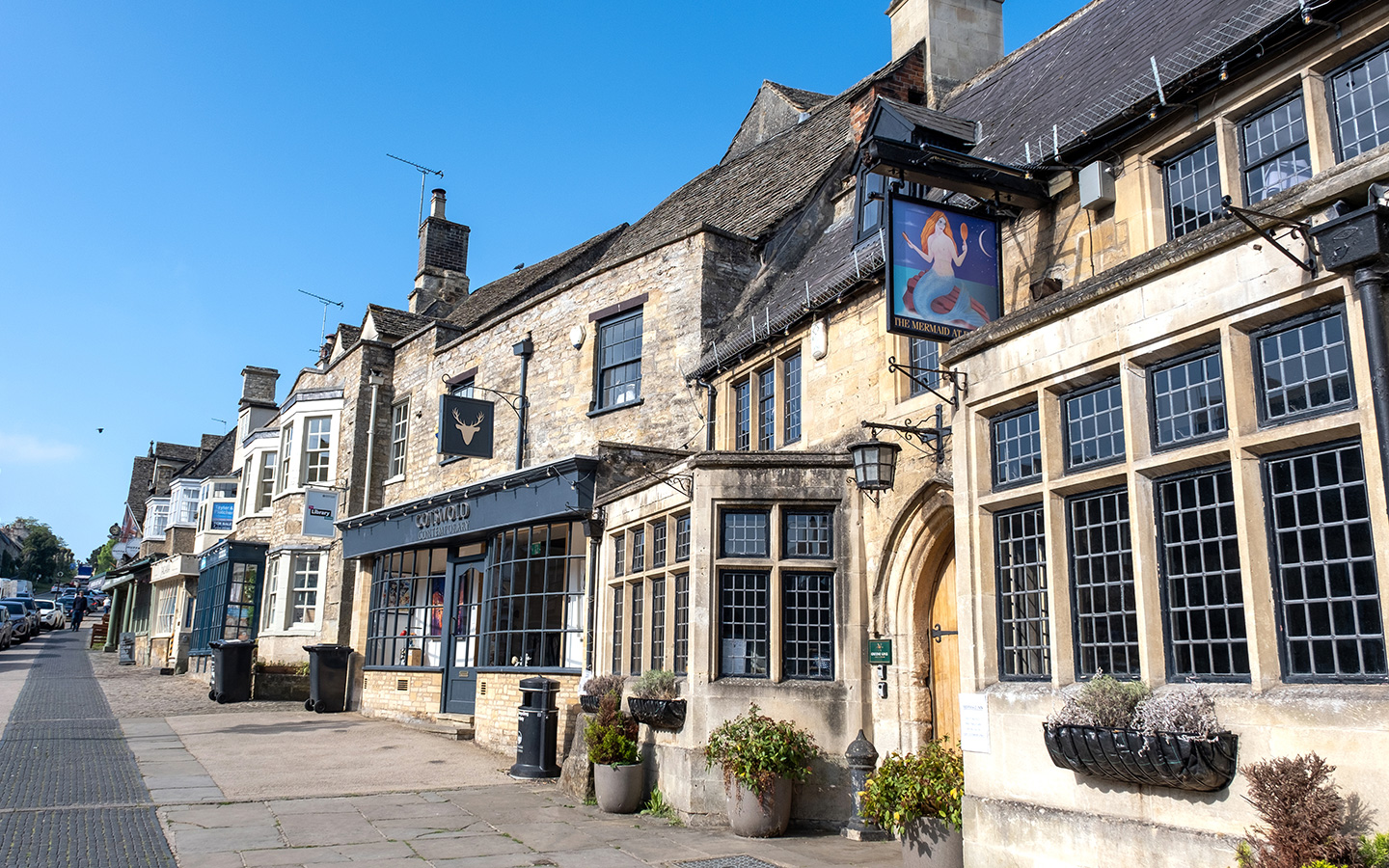
It’s around three miles to Burford, which has a great selection of shops, pubs and restaurants as well as Burford Garden Centre, The Tolsey Museum and Church of St John the Baptist. Also nearby are the Cotswold Wildlife Park (5 miles) and Crocodiles of the World (3 miles).
The picturesque ruins of English Heritage manor house Minster Lovell Hall and Dovecote on the banks of the River Windrush are three miles to the east. You’re also within easy reach of Bampton (8 miles), which featured as the village of Downton in the Downton Abbey TV series and films. Or it’s 18 miles to Oxford for museums, colleges and punting on the river.
Places to eat in Asthall and Swinbrook
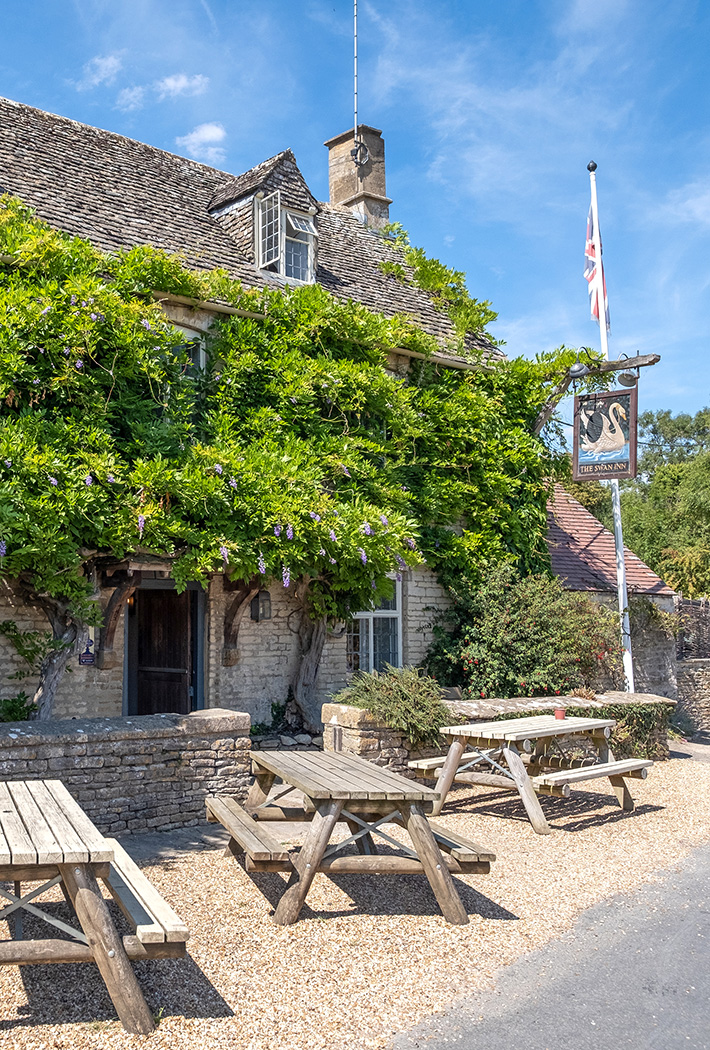
The Swan Inn in Swinbrook has an idyllic setting, overlooking the village green and River Windrush. This 17th-century pub was once owned by the youngest Mitford sister, Deborah, who later became the Duchess of Devonshire. Local Swinbrook beef and Cotswold cheese feature on the seasonal menu, and they do a tasty Sunday lunch. Open fires, flagstone floors and exposed wooden beams make it cosy in winter, and there’s a riverside terrace for sunny afternoons.
Despite being part-tourist attraction, part-pub, Jeremy Clarkson’s Farmer’s Dog in Asthall manages to deliver on the food. The menu centres on hearty pub classics, like steaks, pies, burgers and sausage and mash, made using meat from the on-site butcher. Portions are generous and service is friendly, if a bit rushed. Just make sure to book well ahead, especially at weekends.
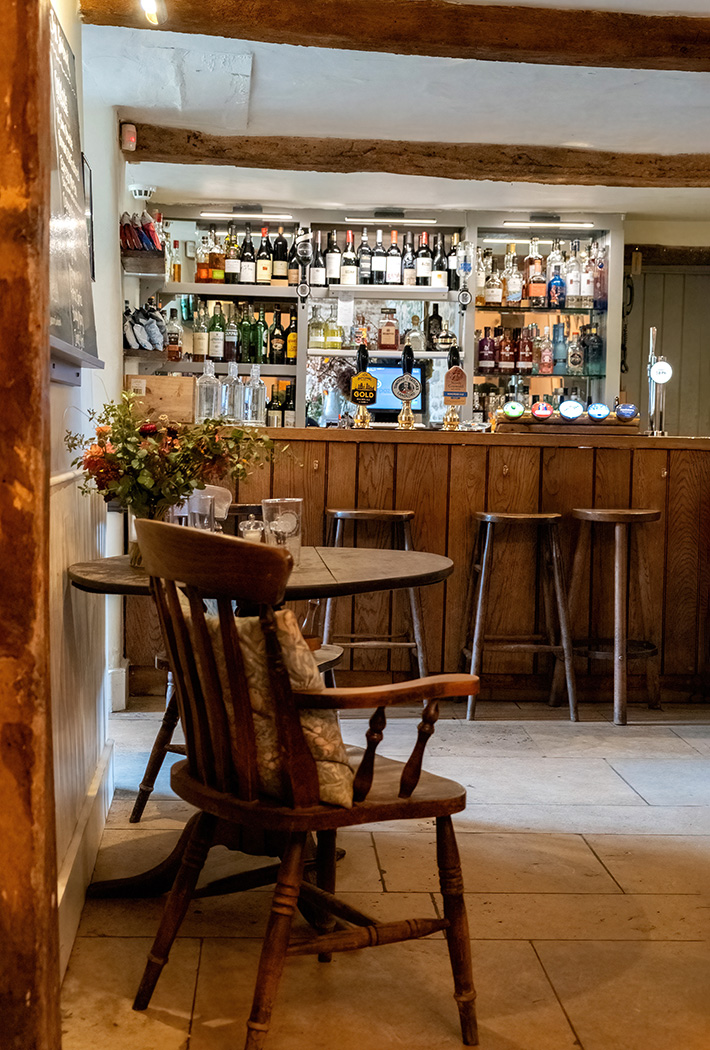
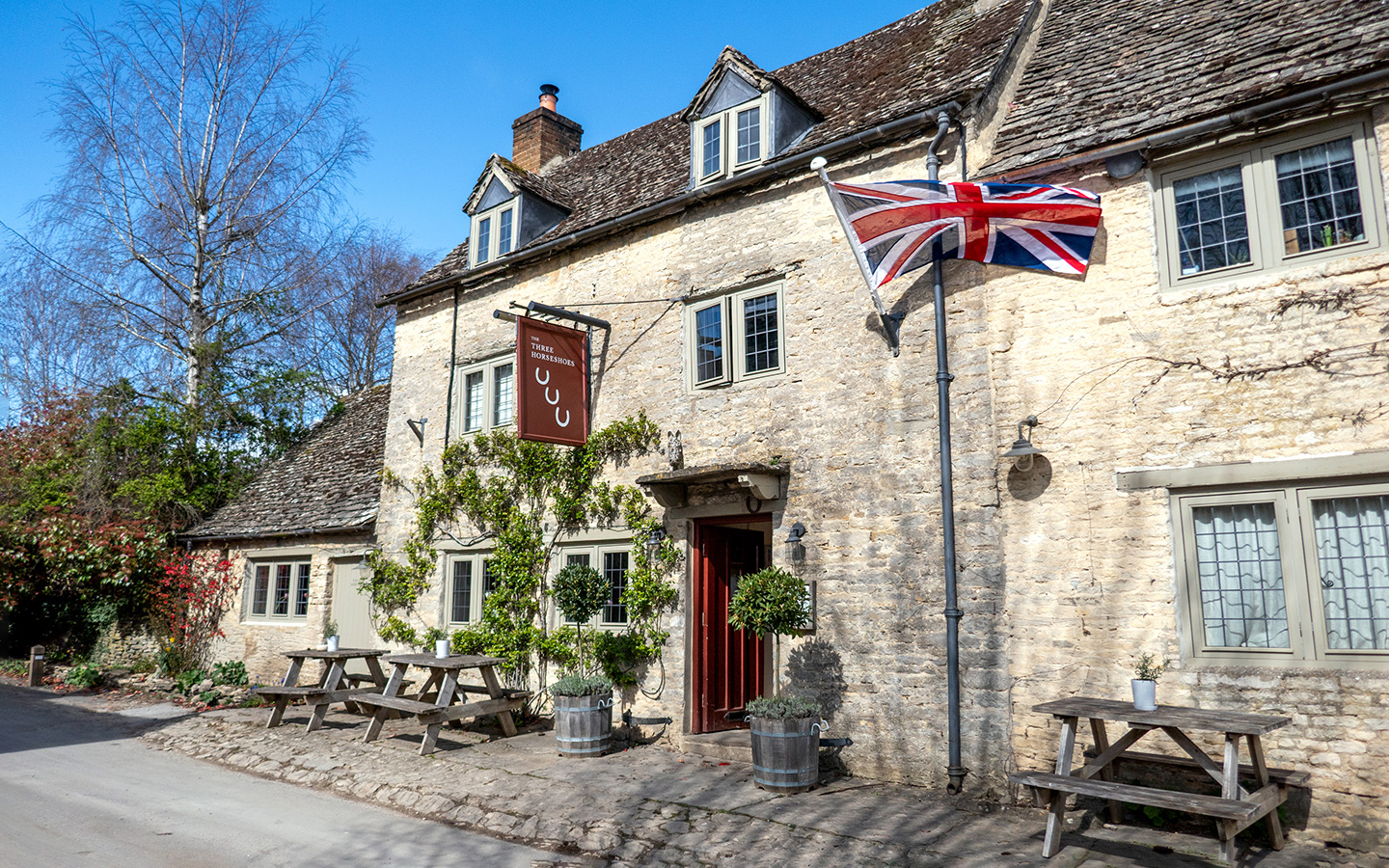
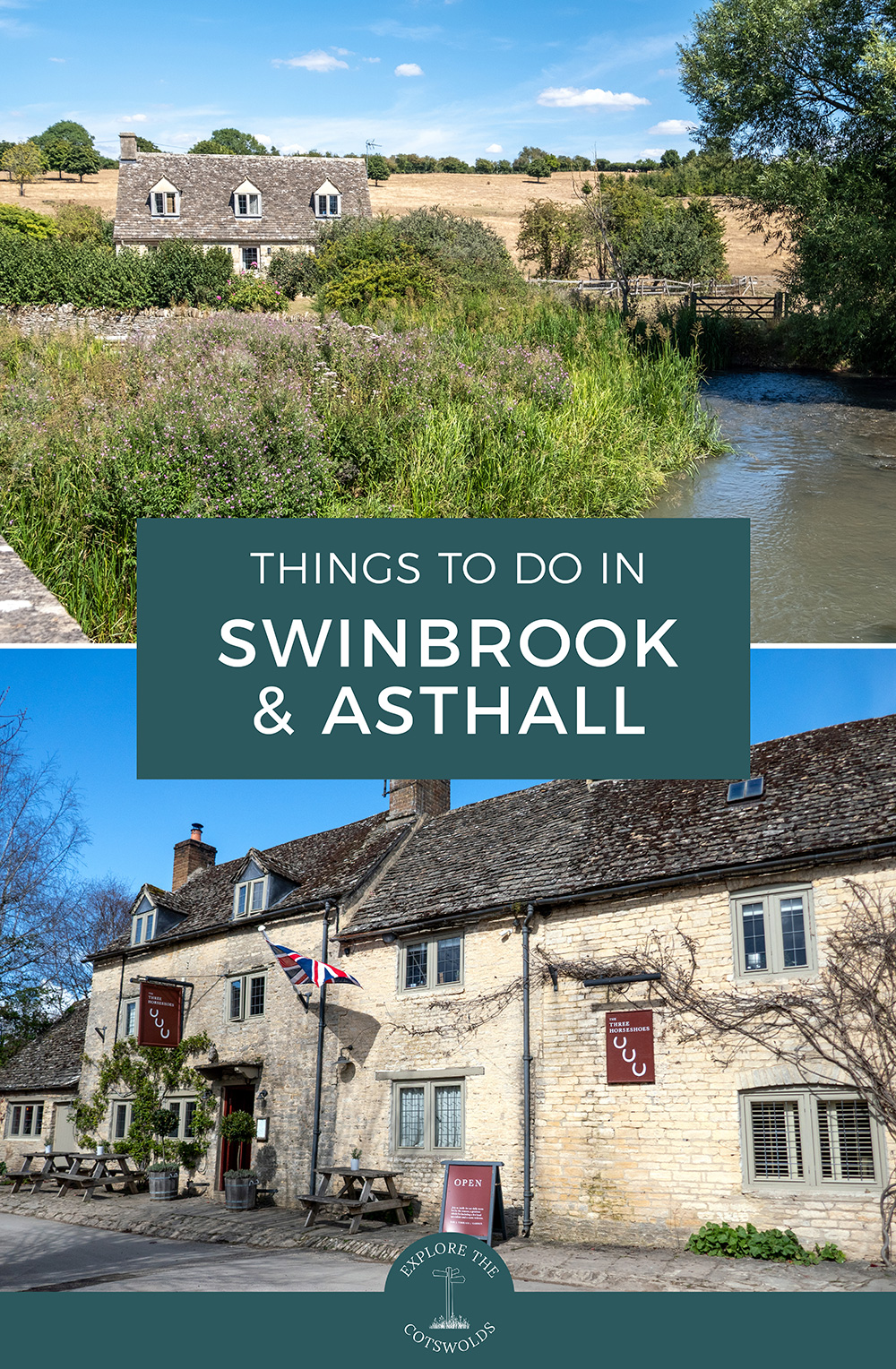
The Three Horseshoes in Asthall is a more understated option, with elegant interiors and a peaceful village setting. It’s owned by the Bamford family of Daylesford Organic, and the menu uses their fresh produce in dishes like seared lamb rump or pan-fried sea bass. There are also wood-fired pizzas in the garden in summer, local cask ales and ciders, wines and seasonal cocktails.
Where to stay in Asthall and Swinbrook
The Swan Inn* has 11 individually designed bedrooms, split between the Riverside Cottage and a converted stable block. They range from Comfy rooms to larger Very Comfy rooms with super-king or twin beds (one of which has an extra child’s bed), some with roll-top baths, exposed beams and river or orchard views. Overnight stays include breakfast, and you can add on dinner too.
The Three Horseshoes* also has six bedrooms, each with different horse-themed names. They’re decorated in a contemporary country style, with natural colours and materials. Some are located in the original 18th-century pub and other in a separate courtyard building. Each has a king or super-king-sized bed, walk-in shower and botanical toiletries, and breakfast is included.
If you prefer self-catering, Hillside Cottage* is a beautifully restored four-bedroom holiday home overlooking St Mary’s Church in Swinbrook, which sleeps up to eight. One of the village’s oldest cottages, it mixes original features with spacious modern interiors, including a large farmhouse kitchen with an Aga, two sitting rooms, three bathrooms and an enclosed garden.
How to get to Asthall and Swinbrook
By car
Asthall and Swinbrook are located a few miles east of Burford – it’s 2.5 miles to Swinbrook and 3.5 miles to Asthall – a short distance off the A40 between Cheltenham and Oxford. There is no car park in either village. Limited roadside parking is available, but make sure to avoid blocking driveways. There’s also customer parking at The Swan Inn, Three Horseshoes and Farmer’s Dog.
By public transport
To reach Asthall and Swinbrook without a car, start by travelling to Burford. The Pulhams X52 bus (every day) runs from Oxford (1 hour) or Cheltenham (50 minutes), which both have train stations. The bus stops at the Oxford Road Layby, at the top of Burford Hill by the A40 roundabout.
From there you can catch a Stagecoach 233 bus (every day) towards Witney, which takes six minutes and stops next to the The Farmer’s Dog on the A40. It’s a 15-minute walk into Asthall village or 40 minutes to Swinbrook. Alternatively, you could walk from Burford – it’s 1.5 miles to Swinbrook or just under 3 miles to Asthall, following public footpaths through the Windrush Valley.
* This site contains affiliate links, where I get a small commission from purchases at no extra cost to you.
Save for later
You might also like